
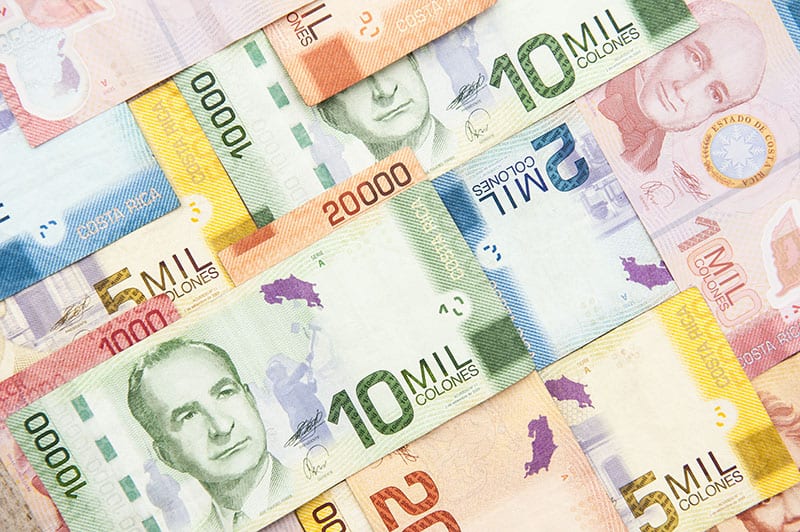
Costa Rica’s official currency is the colón (₡, currency code CRC). U.S. dollars are also widely accepted in tourist areas, hotels, and for tours, and credit and debit cards work in cities, resorts, and larger businesses. For sodas, buses, small shops, and rural areas, you’ll want some colones in your pocket.
Here’s how the colón works, when to use dollars or cards, and how to get and spend money without losing out on fees and exchange rates.
Meet the Colón: Costa Rica’s Currency
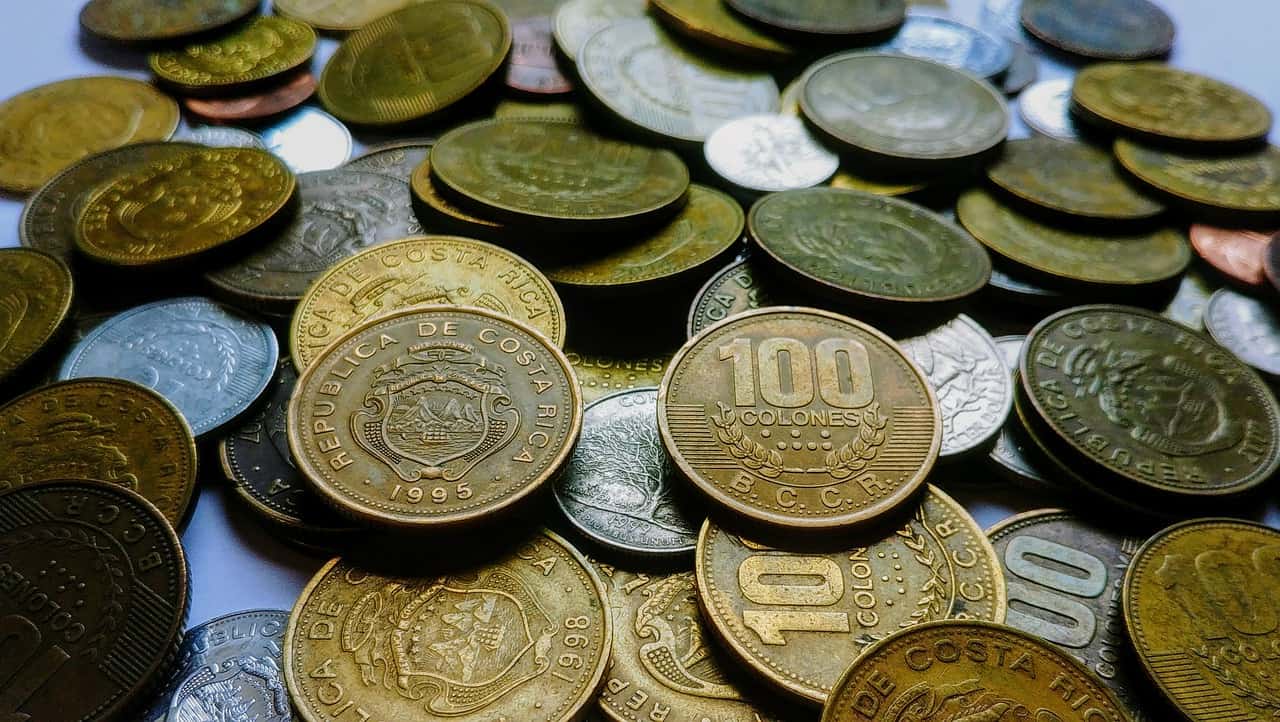
The colón has been Costa Rica’s currency since 1896, when it replaced the Costa Rican peso. It’s named after Christopher Columbus, Cristóbal Colón in Spanish. Coins come in 5, 10, 25, 50, 100, and 500 colones. Banknotes come in 1,000, 2,000, 5,000, 10,000, 20,000, and 50,000 colones; each features a notable Costa Rican on the front and one of the country’s ecosystems and its wildlife on the back, so they’re easy to tell apart by color and design.
Exchange rate: The colón floats against the dollar, and it has strengthened considerably in recent years. Lately it has traded at around ₡450 to the dollar, so a ₡1,000 note is worth a little over $2 and a ₡5,000 note a little over $11. Check the Banco Central de Costa Rica’s reference rate before your trip for the current figure.
Local life runs on colones. Small vendors, bus drivers, sodas, and rural shops often prefer them or accept nothing else.
U.S. Dollars: Widely Accepted in Tourist Areas
U.S. dollars are accepted at most hotels, tour operators, car rental agencies, and many restaurants and shops in tourist areas such as Tamarindo, La Fortuna, and Manuel Antonio. Many businesses that cater to visitors list prices in dollars.
Two things to know. First, when you pay in dollars, you’ll usually get change in colones, at the business’s own exchange rate, which may be less favorable than a bank’s. Second, bring small bills: $1, $5, $10, and $20 notes are easy to use, while $50 and $100 bills can be hard to break and are sometimes refused. Bills should be in good condition; torn or heavily marked notes may not be accepted.
Credit Cards in Costa Rica: Where They Work and Where They Don’t
Visa and Mastercard are widely accepted in cities, at hotels, supermarkets, chain restaurants, gas stations, and most tour companies; American Express is accepted less often. Contactless payment is common in urban areas.
Outside cities and tourist hubs, cash still rules. A roadside fruit stand, a small soda, or a rural bus won’t take cards. When you do pay by card, if the terminal asks whether to charge you in dollars or colones, choose colones. Letting the merchant convert to dollars, known as dynamic currency conversion, usually means a worse rate. Use a card without foreign transaction fees if you can.
For a quick snapshot, here’s how payment options stack up:
| Payment Type | Where It Works | Pros | Cons |
|---|---|---|---|
| Colones (₡) | Sodas, markets, buses, small shops, rural areas | Accepted everywhere; best for small purchases | Hard to exchange back home |
| U.S. dollars ($) | Hotels, tours, tourist-area businesses | No need to exchange before you arrive | Change comes in colones at the shop’s rate |
| Credit/debit cards | Cities, resorts, supermarkets, larger businesses | Secure and convenient | Limited in rural areas; watch foreign fees |
Getting Cash: ATMs and Exchange
ATMs are the easiest way to get colones, and many bank ATMs let you choose between colones and dollars. Use machines at or inside banks such as Banco Nacional, Banco de Costa Rica, or BAC during the day, and check what your home bank charges for foreign withdrawals. Avoid exchanging money at airport kiosks or hotel desks, which usually offer poor rates; banks give better ones but may ask for your passport.
Withdraw what you need for a few days at a time rather than carrying large amounts of cash. Locals also pay each other instantly with the bank-to-bank app SINPE Móvil, which you may see offered at small businesses; our guide explains whether tourists can use it. And for a reality check on how much cash you actually need, read what travelers get wrong about cash in Costa Rica.
Real-Life Scenarios: Money in Action
Say you’re in Playa del Coco and book a snorkeling tour priced in dollars. You pay with a $20 bill and get your change in colones at the operator’s rate. Lunch at a local soda costs a few thousand colones, cash only, so you’re glad you visited the ATM. That night, your hotel charges your Visa, and you choose to be billed in colones. Three stops, three payment methods.
Or you’re hiking near Arenal Volcano and spot handmade bracelets at a roadside stand. No card machine, no dollar prices; colones save the day. The lesson: carry both currencies in small denominations, and keep a card as backup.
Costa Rica Currency FAQ
Should I bring colones or dollars to Costa Rica? Bring some U.S. dollars in small bills and a debit card. There’s no need to buy colones before you arrive; get them from an ATM once you land.
Can I use dollars everywhere? Not everywhere. Dollars work in tourist areas, but buses, small sodas, and rural businesses often want colones.
Do Costa Rican ATMs give dollars? Many bank ATMs let you choose colones or dollars.
Do I need to tip in colones? Either currency works for tips. Restaurant bills usually include a 10% service charge; see our tipping guide for when to add more.
What should I do with leftover colones? Spend them before you fly home, on gas, a last meal, or souvenirs, or exchange them at a bank in Costa Rica. Colones are difficult to exchange abroad.
Wrapping Up
Costa Rica’s money system is simple once you know it: colones for everyday local spending, dollars for tourist businesses, and a card for hotels and bigger purchases. Carry small bills in both currencies, choose colones when paying by card, and you’ll spend with confidence wherever your trip takes you.