
The best Costa Rica souvenirs are the things Ticos actually use: the coffee they brew every morning, the sauce on every soda table, the crafts made in specific towns by specific families. Here’s what’s worth the suitcase space.
The most popular Costa Rica souvenirs are coffee, Salsa Lizano, a chorreador coffee stand, Boruca masks and textiles, Chorotega pottery from Guaitil and painted oxcart replicas from Sarchí. Food souvenirs are cheapest at supermarkets, crafts are best bought where they’re made, and the airport is the most expensive place to shop. Skip anything made from shells, coral, feathers or other wildlife; it’s illegal to take home.
This list covers 14 souvenirs, where to buy each one, and what you can and can’t pack.
| Souvenir | Best place to buy | Good to know |
|---|---|---|
| Coffee | Supermarkets, coffee farms | Buy whole beans; roasted coffee is fine to pack |
| Salsa Lizano | Any supermarket | Liquid; checked bag or buy after security |
| Chorreador | Markets, Sarchí, gift shops | Folds flat if it’s a simple stand |
| Chocolate | Supermarkets, airport shops | Keep it out of the sun |
| Cacique guaro | Supermarkets, airport duty-free | Liquor; check your home allowance |
| Chilero and hot sauce | Supermarkets | Liquid; pack in a checked bag |
| Boruca mask | Boruca, craft shops | Ask who carved it |
| Boruca weaving | Boruca, Rey Curré, craft shops | Handwoven cotton, natural dyes |
| Chorotega pottery | Guaitil, near Santa Cruz | Wrap carefully; it’s fragile |
| Oxcart replica | Sarchí, markets | Small ones pack easily |
| Sarchí rocking chair | Sarchí workshops | Ask about shipping or disassembly |
| Coconut bowls | Beach markets | Light and unbreakable |
| Pura Vida T-shirt | Everywhere | Check for “Hecho en Costa Rica” |
| Hammock | Markets, beach stalls | Bulky but light |
Food and drink
Food and Drink Souvenirs from Costa Rica
1. Costa Rican coffee

Coffee is the classic Costa Rica souvenir, and for good reason. The country has eight official growing regions, and Tarrazú, south of San José, is the best known. Buy whole beans if you can; they stay fresh longer than ground coffee. Supermarkets sell good local brands for far less than airport shops, and coffee farms sell their own beans after a tour. Look for caracolillo, or peaberry, a small, round bean that some farms sell separately.
Read our guide to Costa Rican coffee before you shop, and see our Costa Rica coffee tours guide if you want to buy straight from a farm.
2. Salsa Lizano

Salsa Lizano is a thin, tangy brown vegetable sauce, first made in Alajuela in 1920 and now owned by Unilever. Ticos put it on gallo pinto, eggs, rice and almost everything else. Every supermarket sells it for a couple of dollars, and it’s one of the cheapest souvenirs that people back home will actually use. Can’t fit it in your bag? Salsa Lizano is sold online too.
3. Chorreador coffee stand

The chorreador is Costa Rica’s traditional coffee maker: a wooden stand that holds a cloth filter bag, called a bolsita, over a cup or pot. You pour hot water slowly over the grounds and let it drip through. Simple stands are sold at markets and gift shops around the country, and carved or painted versions come from Sarchí. Pair one with a bag of beans for a complete gift. Our guide to the chorreador covers its history and how to brew with it.
4. Costa Rican chocolate

Cacao grows in several parts of the country, and small Costa Rican chocolate makers sell bars at supermarkets, farmers markets and gift shops. Chocolate-covered coffee beans and macadamias are easy airport buys. Pack chocolate in your carry-on or the middle of your suitcase; it melts quickly in a hot car or on a sunny tarmac.
5. Cacique guaro
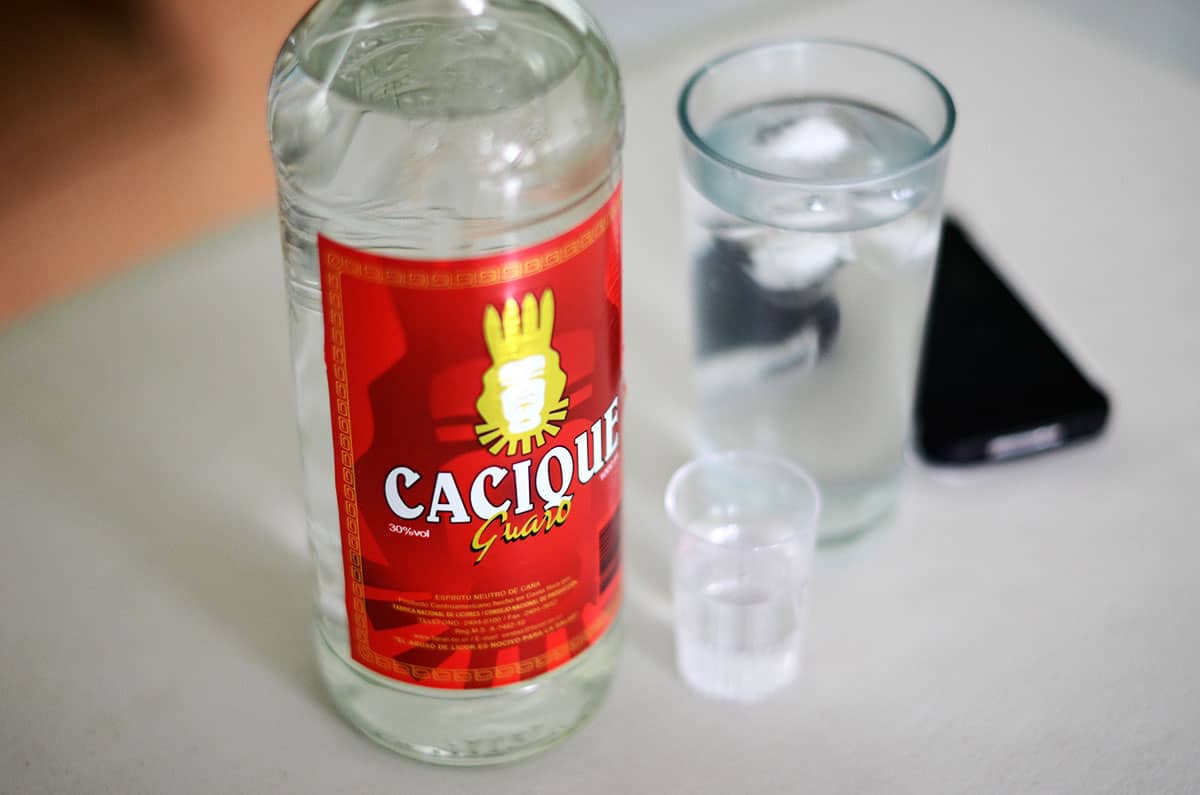
Guaro is Costa Rica’s national liquor, a clear sugarcane spirit made by the state-owned National Liquor Factory (FANAL) and sold as Cacique. The standard red-label bottle is 30% alcohol. Buy it at a supermarket and pack it in your checked bag, or pick it up at the airport duty-free shop after security. Read our guide to Cacique guaro for how Ticos drink it, including the spicy chiliguaro shot.
6. Chilero and hot sauce
Chilero is a jar of pickled onions, carrots, cauliflower and hot chiles in vinegar, and it sits on many Costa Rican tables next to the Lizano. Supermarkets also sell local hot sauces made with the fiery panameño chile. Both are cheap, and both are liquids, so wrap the jars well and put them in a checked bag.
Handmade
Handmade Costa Rica Souvenirs
Handmade crafts cost more, but they’re the souvenirs with real stories behind them. Buy as close to the source as you can, and ask who made the piece.
7. Boruca masks

The Boruca people of southern Costa Rica carve wooden masks for the Dance of the Little Devils, a festival held around New Year’s that reenacts their resistance to the Spanish. Traditional masks show devils with horns and tusks; newer designs show jaguars, toucans and other local animals. Prices depend on the size, the carving and the artist. The best place to buy is Boruca itself, where you can meet the carvers. Our guide to Boruca masks has more.
8. Boruca weaving
Boruca women weave cotton bags, belts and table runners on backstrap looms, using natural dyes. The rarest color is a purple that comes from a sea snail on the southern Pacific coast; the snail is now protected, and only a few weavers still use the dye. Buy in Boruca or the nearby community of Rey Curré, or at craft shops that name the artisan.
9. Chorotega pottery from Guaitil
In Guaitil, a village near Santa Cruz in Guanacaste, families still make pottery in the style of the Chorotega people who lived in the region before the Spanish. They shape the clay by hand without a wheel, color it with natural pigments, polish it with smooth stones and fire it in wood-fired ovens. Many shops let you watch potters at work. It’s an easy half-day trip from Tamarindo or Liberia. Read more about the region in our Guanacaste culture guide.
10. Painted oxcart replicas
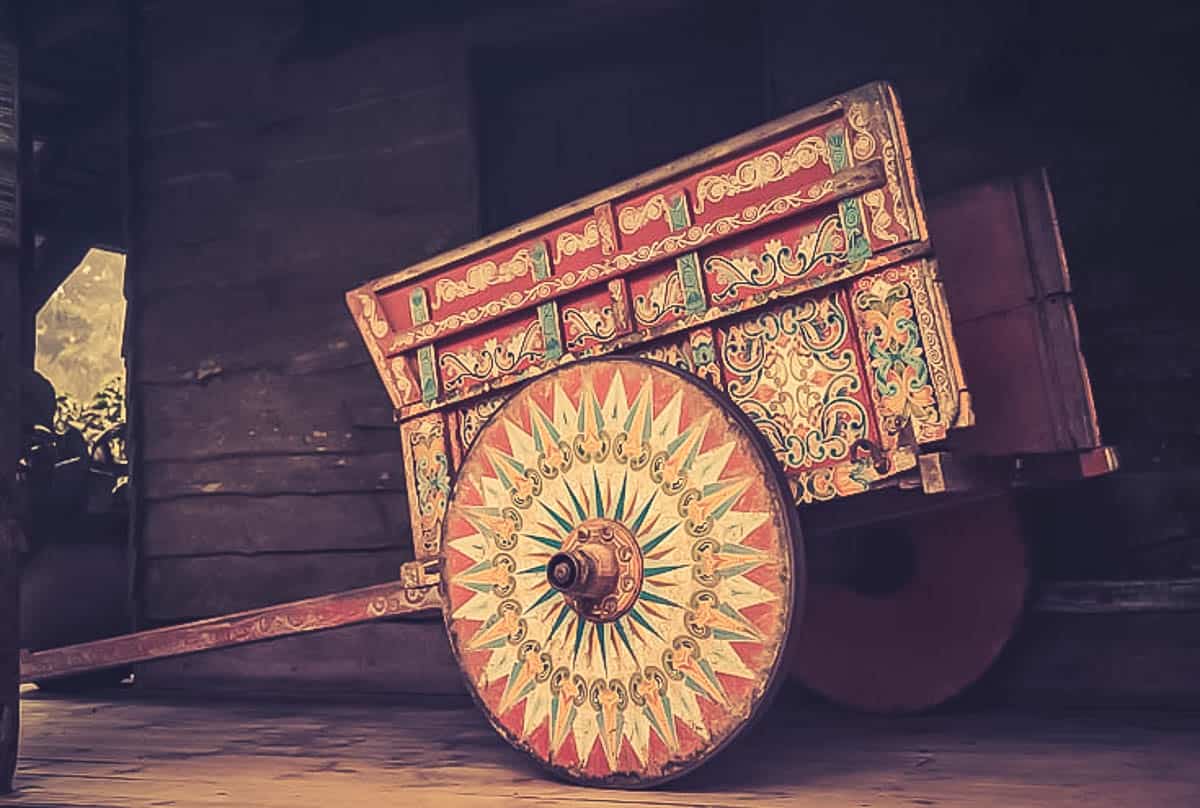
Photo: Steven Hodel
The painted carreta, or oxcart, once hauled coffee from the Central Valley to the Pacific coast, and UNESCO recognizes Costa Rica’s oxherding and oxcart traditions as intangible cultural heritage. Miniature replicas, from keychains to tabletop models, are sold all over the country. The center of the craft is Sarchí, about 46 kilometers northwest of San José, where workshops still build and paint full-size carts and a giant oxcart in the town park holds a Guinness record as the largest ever built. See our guide to the Costa Rica oxcart.
11. A Sarchí rocking chair

Sarchí has made furniture since the late 1800s, and its wooden rocking chairs with leather seats and backs are the biggest souvenir on this list. Before you buy, ask if the chair can be taken apart for travel or shipped abroad, and check your airline’s rules for oversized checked bags. If you’d rather not haul one home, Costa Rican leather rocking chairs are also sold online.
12. Coconut bowls and carved wood

Beach towns sell polished coconut-shell bowls, along with carved wooden bowls, cutting boards and utensils. They’re light, unbreakable and easy to pack. For carved wood, ask what kind of wood it is; pieces from fast-growing or reclaimed wood are the better buy. Coconut bowls are also sold online if you run out of room.
Easy gifts
Easy, Packable Costa Rica Gifts
13. A Pura Vida T-shirt

“Pura vida” is Costa Rica’s all-purpose phrase for hello, thanks, goodbye and “all good,” and it’s printed on T-shirts sold in every tourist town. Designs run from plain text to sloths, toucans and surfboards. Check the label for “Hecho en Costa Rica” if you want one made locally. Our guide to what pura vida means explains the phrase.
14. A hammock
Woven cotton hammocks hang outside market stalls and beach shops all over the country. They’re light, fold small and make good gifts for anyone with a porch or two sturdy trees. Check the weave and the end loops before you pay; tighter weaves last longer.
Shopping
Where to Buy Souvenirs in Costa Rica
- Supermarkets: the cheapest place for coffee, Salsa Lizano, chilero, chocolate and guaro.
- San José’s Mercado Central: coffee, souvenirs, chorreadores and leather goods under one roof. See our San José Central Market guide.
- Sarchí: oxcarts, rocking chairs and furniture, about an hour from San José.
- Guaitil: Chorotega pottery straight from the potters.
- Boruca and Rey Curré: masks and weaving from Indigenous artisans in the southern Pacific region.
- Farmers markets: local coffee, honey, chocolate and crafts. See our farmers markets guide.
- The airport: convenient for last-minute coffee, chocolate and duty-free liquor, but the most expensive option. Our Costa Rica airport guide covers both international airports.
Packing
What You Can and Can’t Bring Back from Costa Rica
- Don’t take wildlife: shells, coral, sand, starfish, feathers, bones, seeds, orchids and anything made from turtle shell or animal parts can be confiscated at the airport, and taking them can lead to a criminal investigation.
- Don’t buy “real” pre-Columbian artifacts: ancient pottery, jade and gold pieces are protected national heritage, and the U.S. restricts their import. Buy clearly labeled replicas instead.
- Liquids: Lizano, hot sauce and guaro go in your checked bag, or buy liquor at duty-free after security.
- Coffee: roasted coffee is generally fine to bring into the U.S. and most other countries.
- Fresh fruit and plants: leave them behind; most countries, including the U.S., restrict them.
Good to know
Costa Rica Souvenirs FAQ
What is the most popular souvenir from Costa Rica?
Coffee is the most popular, followed by Salsa Lizano, Pura Vida T-shirts and handmade crafts like Boruca masks and painted oxcart replicas.
What is Costa Rica famous for producing?
Coffee is Costa Rica’s best-known product. The country is also known for bananas, pineapples, sugarcane and cacao, and for crafts like Sarchí oxcarts, Boruca masks and Chorotega pottery.
Where is the cheapest place to buy souvenirs in Costa Rica?
Supermarkets are cheapest for coffee, sauces, chocolate and liquor. Crafts cost less, and more of the money reaches the maker, when you buy in the towns where they’re made. The airport is the most expensive.
Can I bring coffee back from Costa Rica?
Yes. Roasted coffee is generally allowed into the U.S. and most other countries. Whole beans stay fresh longer than ground coffee.
Can I take shells or sand home from Costa Rica?
No. Shells, coral, sand, feathers and other natural items can be confiscated at the airport, and taking them can lead to criminal charges.
Can I bring Salsa Lizano on a plane?
Not in a carry-on unless the bottle meets your airport’s liquid limit. Pack it in a checked bag, wrapped in clothes.
The short version
Buy coffee, Salsa Lizano and guaro at a supermarket, not the airport.
Buy crafts where they’re made: oxcarts and rocking chairs in Sarchí, pottery in Guaitil, masks and weaving in Boruca.
Leave shells, coral and anything made from wildlife on the beach.