
Marino Ballena National Park protects a strip of beach and more than 5,000 hectares of ocean around Uvita, on Costa Rica’s South Pacific coast. It’s best known for the Whale Tail, a sandbar at Punta Uvita that you can walk only around low tide, and for humpback whales that visit from July to November and December to March. Adult foreign visitors pay $6 plus tax, buy tickets at the entrance (recent visitors report card only) and should bring their own water, because there’s none inside.
This guide to Marino Ballena National Park, also called Ballena National Marine Park, is for travelers planning a visit from Uvita, Dominical or Ojochal. It covers the park’s sectors, how to time the Whale Tail walk, whale watching, snorkeling, fees, rules and when to go.
| Marino Ballena | At a glance |
|---|---|
| Location | Uvita, South Pacific; about 3.5–4 hours from San José by car |
| Entrance fee | $6 plus tax for adult foreigners; under 12 and 65+ free |
| Payment | At the sector entrance; recent visitors report card only |
| Hours | From 7 a.m.; closing 4–6 p.m. depending on sector |
| Whale Tail | Walkable around low tide; about 1.8–2 km each way from the Uvita entrance |
| Whale season | July–November and December–March |
| Facilities | Restrooms near entrances; no drinking water or food inside |
| Parking | Private lots near entrances, roughly ₡2,000–4,000 a day |
Overview
What Is Marino Ballena National Park?
Ballena means whale, and the park was created to protect the bay where humpback whales arrive each year to mate and give birth. It covers a narrow strip of beach and more than 5,000 hectares of sea between Uvita and Ojochal, including rocky islets, mangroves and coral reef around Isla Ballena and the Tres Hermanas islets.
Most visitors come for three things: the Whale Tail at Punta Uvita, whale-watching boat tours and quiet beaches backed by forest. Seen from above, the sandbar and rocky point form the shape of a whale’s tail.
Sectors
Marino Ballena Park Sectors: Which Entrance to Use
The park has four sectors, each with its own entrance along the coastal highway. One ticket covers all of them for the day.
| Sector | Best for | Notes |
|---|---|---|
| Uvita | The Whale Tail | Main entrance, busiest; closest access to Punta Uvita |
| Colonia | Quieter beach, surf | About 10 minutes south of Uvita; you can walk north to the Whale Tail |
| Ballena | Playa Ballena, Playa Arco | Playa Arco is reachable only at low tide; shorter hours |
| Piñuela | Small cove | Not always open; check locally |
Whale Tail
How to Walk the Whale Tail at Punta Uvita
The Whale Tail is a sandbar that connects Playa Uvita to a rocky point. At high tide it’s under water. Timing is the whole game.
- Check a tide chart for Uvita the day before. Search “Uvita tide table” or use a tide app.
- Arrive about an hour before low tide. The sandbar starts to appear two to three hours before low tide.
- Enter at the Uvita sector and walk south along the beach. It’s about 1.8–2 km to the tip, or 20 to 30 minutes each way.
- Explore the tip and tide pools in reef shoes or water shoes. The rocks are sharp and slippery.
- Start back as the tide turns. Don’t wait until water is running across the sandbar.
Bring water, sunscreen and a hat; there’s little shade on the sandbar. Don’t leave bags unattended on the beach.
Whales
Whale Watching in Marino Ballena
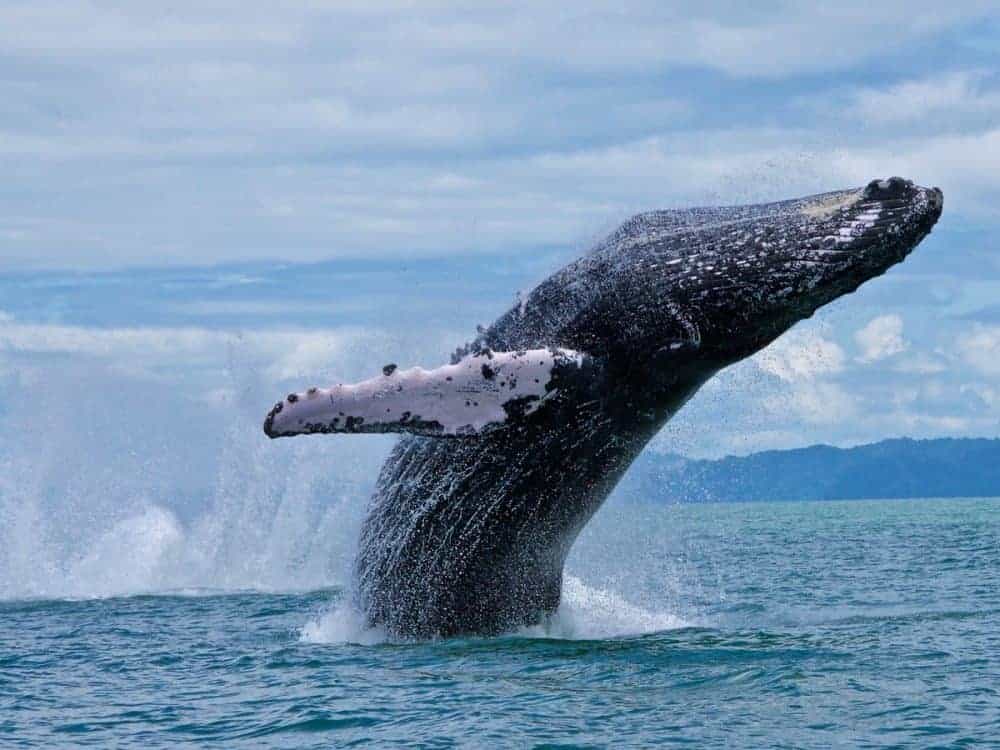
Humpback whales visit from two directions. Whales from the Southern Hemisphere arrive from about July to November, with the peak from August to October. Whales from the North Pacific come from about December to March. Dolphins, including bottlenose and spotted dolphins, are present year-round.
Boat tours leave from Uvita, usually in the morning when the sea is calmer. Licensed operators follow Costa Rica’s whale-watching rules: boats stay at least 100 meters from whales and 50 meters from dolphins, approach from behind at an angle, and limit time with a group to 30 minutes. Swimming with whales isn’t allowed. Uvita also hosts a whale and dolphin festival each September.
For more on seasons and other places to see whales, see our Costa Rica whale watching guide.
Snorkeling
Snorkeling in Marino Ballena
You can snorkel at the rocky tip of the Whale Tail, but only around low tide. At other times the swim is long and the currents are risky. Visibility varies a lot and is often poor after heavy rain, when rivers carry sediment into the bay.
Guided boat tours offer the best snorkeling in the park, at the reefs around Isla Ballena and the Tres Hermanas islets, often combined with whale watching. Bring your own mask and snorkel if you’re going in from the beach; fins aren’t allowed in the park.
If clear water is your priority, book a full-day trip to Caño Island, about an hour offshore, which has better visibility and more marine life.
Beaches
Beaches in Marino Ballena National Park
- Playa Uvita: wide and flat, leading to the Whale Tail. The busiest beach in the park.
- Playa Colonia: quieter, with surf when the swell is up.
- Playa Ballena: long, forest-backed and often nearly empty.
- Playa Arco: a rock arch reached from the Ballena sector, at low tide only.
Waves and rip currents vary by beach and tide, so read our guide to rip currents in Costa Rica before you swim.
Fees and rules
Marino Ballena Entrance Fee, Hours and Rules
- Fee: $6 plus tax for adult foreign visitors. Children under 12 and seniors 65 and older enter free.
- Tickets: buy at the sector entrance. Recent visitors report the booth takes cards only, so don’t count on paying cash. Unlike Manuel Antonio, you don’t need to book ahead on SINAC; see our SINAC tickets guide for parks that do.
- Hours: the park opens at 7 a.m. The Uvita and Colonia sectors have recently stayed open until about 6 p.m., while the Ballena sector closes earlier, around 4 p.m. Rangers may turn people away near closing.
- Drones: not allowed without a permit.
- Bring: water, snacks, sunscreen, a hat and reef shoes. There are restrooms near the entrances but no drinking water, food stalls or shade inside, and you should carry out all trash.
Getting there
How to Get to Marino Ballena National Park
- By car: from San José, take Route 27 and the Costanera (Route 34) south through Jacó and Quepos. Plan on about 3.5 to 4 hours to Uvita. The park entrances are along the Costanera, and a standard car is fine.
- From Dominical: Uvita is about 20 minutes south. See our Dominical guide.
- By bus: Tracopa runs direct buses from San José to Uvita. See our public bus guide.
Most visitors stay in Uvita, Ojochal or Dominical. Combine the park with Nauyaca Falls near Dominical, or continue south toward the Osa Peninsula and Corcovado National Park.
Timing
Best Time to Visit Marino Ballena
The dry season, from about December to April, brings the most sunshine and the calmest beach days, and it overlaps with the northern whale season. July to November is wetter but is the main humpback season, with mornings often clear before afternoon rain. September and October are the rainiest months, and some South Pacific hotels close for part of that period. See our guide to the best time to visit Costa Rica by region.
Avoid
Common Mistakes to Avoid
- Showing up at high tide and finding the Whale Tail under water.
- Bringing only cash for the entrance fee.
- Forgetting water. There’s none to buy inside the park.
- Expecting clear Caribbean-style snorkeling from the beach in rainy season.
- Booking the cheapest whale tour without checking that the operator is licensed and follows the distance rules.
Packing for the trip? See our Costa Rica packing list.
FAQ
Marino Ballena National Park: FAQ
How much is the entrance fee for Marino Ballena National Park?
$6 plus tax for adult foreign visitors. Children under 12 and seniors 65 and older enter free, and one ticket covers all sectors for the day.
When can you walk the Whale Tail?
Around low tide. The sandbar starts to appear two to three hours before low tide; arriving about an hour before low tide gives you the most time. Check a tide chart for Uvita.
When is whale season in Uvita?
Humpbacks visit from about July to November, peaking from August to October, and again from about December to March.
Can you pay cash at Marino Ballena?
Recent visitors report that the entrance booths take cards only, so bring a credit or debit card.
Is the snorkeling good at Marino Ballena?
It’s best on a boat tour to Isla Ballena or the Tres Hermanas islets, and possible at the Whale Tail’s tip at low tide. Visibility is often poor after rain; Caño Island is the better choice for clear water.
Which entrance is best for the Whale Tail?
The Uvita sector, which gives the shortest walk to Punta Uvita. You can also walk north from the Colonia sector.
The short version
Check the tide chart and arrive about an hour before low tide for the Whale Tail.
Bring a card for the $6-plus-tax fee, plus water, sunscreen and reef shoes.
Visit July to November or December to March for the best chance of humpbacks.