
Traveling to Costa Rica with a baby is very doable: flights from much of the U.S. are short, the country stays on Central Standard Time year-round, private hospitals in the Central Valley are good, and diapers and formula are sold in supermarkets. The work is in the details. Your baby needs a passport, a car seat is required by law, and you should talk to your pediatrician about an early measles shot, hepatitis A and malaria prevention for some regions before you go. Plan short drives, base yourself near calm beaches or easy nature, and protect your baby from sun and mosquitoes.
This guide is for parents of babies and young toddlers planning a Costa Rica trip. It covers documents and flights, car seats and getting around, health and safety, the best places to go, where to stay, what to pack and the mistakes that make trips harder.
| Costa Rica with a baby | At a glance |
|---|---|
| Documents | Baby’s own passport; a copy of the birth certificate for lap-infant age proof |
| Flights | Under-2s can fly on a lap; direct flights to San José (SJO) or Liberia (LIR) are easiest |
| Car seats | Required by law; rent from the car rental company or bring your own |
| Vaccines | Routine shots, plus ask about an early MMR dose (6–11 months) and hepatitis A |
| Malaria | CDC recommends prevention medicine for Alajuela and Limón provinces; ask your pediatrician |
| Mosquitoes | Netting under 2 months; covered skin and a pediatrician-approved repellent after that |
| Sun | Shade and clothing first, especially under 6 months |
| Water | Tap water is safe in many areas; use bottled or boiled water for formula |
Why go
Is Costa Rica Good for Traveling With a Baby?
For most families, yes. Flights from Miami, Houston, Atlanta and other hubs are short, and there’s little or no time change for North Americans. Supermarkets stock diapers, wipes and formula, though imported brands cost more. Private hospitals in the San José area are modern, and pharmacies are everywhere. Families with small children are a normal part of Costa Rican life.
The challenges are real too: long, winding drives between regions, heat and humidity on the coasts, mosquitoes, uneven sidewalks that defeat most strollers, and remote areas far from a hospital. A slower itinerary with fewer bases solves most of them.
Documents
Documents and Flights for Babies
- Passport: every traveler needs a passport, including infants. Apply early; see our passport tips for Costa Rica.
- Lap infants: babies under 2 can usually fly on a parent’s lap. Bring a copy of the birth certificate as proof of age. On international flights, airlines usually charge taxes or a small fare even for lap infants.
- Your own seat: buying a seat lets you use an approved car seat on board, which many parents prefer for longer flights.
- Which airport: fly into Liberia (LIR) for Guanacaste beaches and San José (SJO) for the Central Valley, Arenal and the Caribbean.
- Exit rules: if your baby has Costa Rican citizenship, such as a child born in Costa Rica, or residency, special exit permit rules apply. Check them well before your return flight.
Getting around
Car Seats and Getting Around Costa Rica With a Baby
- Car seats are required by law, and police fine drivers who don’t use them. Babies should ride rear-facing in the back seat.
- Renting: most rental companies rent car seats; reserve one with the car and check its condition at pickup. See our Costa Rica car rental page.
- Bringing your own: many airlines check car seats and strollers free; it’s the surest way to get a seat you trust.
- Taxis and ride-hailing rarely have car seats. Private shuttle companies can often supply one if you ask in advance.
- Keep drives short. Mountain roads make trips longer than maps suggest; two or three hours a day is plenty with a baby. See our guide to driving in Costa Rica.
- Use a carrier. A soft carrier or sling works far better than a stroller on beaches, trails and broken sidewalks.
Health
Health and Safety for Babies in Costa Rica
Vaccines and malaria
- Routine vaccines should be up to date.
- Measles: CDC recommends an early MMR dose for infants 6 to 11 months old before international travel.
- Hepatitis A: recommended for travelers age 1 and older; infants 6 to 11 months can also get a dose before travel.
- Malaria: CDC recommends prevention medicine for travelers to Alajuela and Limón provinces, which include La Fortuna, Tortuguero and Puerto Viejo. Ask your pediatrician what’s safe for your baby’s age and weight.
See our guide to vaccinations for Costa Rica for the full list.
Mosquitoes
Dengue is present in Costa Rica, especially in the rainy season. For babies under 2 months, skip repellent and use netting over the carrier, stroller or crib. For older babies, dress them in light long sleeves and pants, and ask your pediatrician about an EPA-registered repellent; DEET products for children are generally limited to 30%, and oil of lemon eucalyptus isn’t recommended under age 3. Choose rooms with screens or air conditioning.
Sun and heat
The tropical sun is strong year-round. Keep babies under 6 months out of direct sun with shade, hats and lightweight clothing; ask your pediatrician before using sunscreen at that age. For older babies, use a baby-safe sunscreen plus a sun tent or umbrella on the beach. Plan outings for the morning and late afternoon, and watch for overheating.
Water and food
Tap water is safe to drink in many parts of Costa Rica, but quality varies, especially in some Guanacaste beach towns and on the Caribbean coast. Use bottled or boiled water for formula. See our guide to Costa Rica’s drinking water. Fresh fruit and simple dishes such as rice, beans and gallo pinto work well for older babies; wash produce and introduce new foods slowly.
Medical care
Private hospitals such as CIMA, Clínica Bíblica and Hospital Metropolitano are in the San José area, and most towns have pharmacies and clinics. Remote areas can be hours from a hospital. Carry travel medical insurance, save the emergency numbers and know the nearest clinic to each place you stay. See our guides to travel medical insurance and emergency numbers.
Where to go
Best Places to Visit in Costa Rica With a Baby

- Playa Flamingo: calm water, easy services and resort-style hotels. See our Playa Flamingo guide.
- Sámara: a reef-sheltered bay and a small, walkable town. See our Sámara guide.
- Playa Conchal: calm, clear water, though you’ll walk in from Brasilito or stay at the resort. See our Playa Conchal guide.
- Punta Uva: often calm water on the south Caribbean coast near Puerto Viejo.
- Arenal and La Fortuna: easy wildlife walks and hot springs resorts; many hot springs pools are too hot for babies, so look for cooler children’s pools.
- Monteverde: cooler air and short forest walks, but chilly nights and winding roads.
For wildlife the whole family can see, try our guide to seeing sloths with kids, and for full routes, see our family itineraries.
Where to stay
Choosing Baby-Friendly Accommodation
- Confirm a crib in writing, or bring a travel crib.
- Look for air conditioning or good screens, plus a fridge, and ideally a kitchen for bottles and simple meals.
- Ask about stairs and pools. Many hillside hotels have long staircases and unfenced pools.
- Test the shower. Many rooms use electric shower heads with uneven water temperature; check before bathing your baby. See our guide to electric showers.
- Stay longer in fewer places. Three or four nights per base keeps naps and routines on track.
Packing
What to Pack for a Baby in Costa Rica
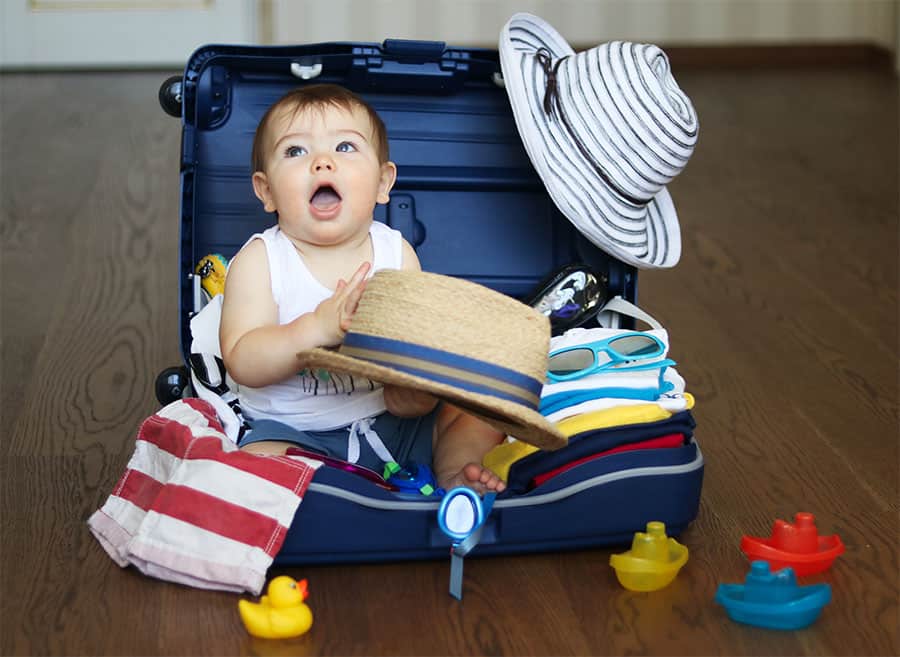
- Soft carrier, and a light travel stroller only if you’ll be in towns with good sidewalks
- Car seat, unless you’ve confirmed a rental seat
- Mosquito netting for the carrier and crib
- Sun hat, UV clothing and a beach sun tent
- Swim diapers and a quick-dry towel
- Your usual formula, if your baby is picky about brands
- Thermometer, pediatrician-approved fever medicine and rash cream
- Copies of passports and the birth certificate
For the rest of your list, see our Costa Rica packing list.
When to go
Best Time to Visit Costa Rica With a Baby
The dry season, December to April, brings the most sunshine and the busiest hotels; Guanacaste gets very hot from March to April. The rainy season, May to November, is greener, cheaper and quieter, with mostly sunny mornings and afternoon storms. The Caribbean coast follows its own pattern, with September and October often drier. See our guide to the best time to visit by region.
Avoid
Common Mistakes When Traveling With a Baby
- Too many hotel changes and long drives in a single trip.
- Assuming a rental car seat will be there without reserving and checking it.
- Skipping the pediatrician visit before the trip, especially for malaria and measles advice.
- Midday beach time in full sun.
- Choosing a remote lodge hours from medical care for a very young baby.
FAQ
Costa Rica With a Baby: FAQ
Is Costa Rica safe for babies?
Yes, for most families, with sensible planning. The main issues are sun, heat, mosquitoes, long drives and distance from hospitals in remote areas.
Does my baby need a passport to travel to Costa Rica?
Yes. Every traveler needs a passport, including infants. Bring a copy of the birth certificate too if your baby flies as a lap infant.
What vaccines does my baby need for Costa Rica?
Routine vaccines, plus CDC recommends an early MMR dose for infants 6 to 11 months and hepatitis A for travelers 1 and older. Ask your pediatrician about malaria prevention for Alajuela and Limón provinces.
Can I rent a car seat in Costa Rica?
Yes. Most rental companies rent car seats; reserve one with the car. Car seats are required by law, and taxis rarely have them.
Can I use tap water for baby formula in Costa Rica?
Use bottled or boiled water for formula. Tap water is safe in many areas, but quality varies by town.
What is the best beach in Costa Rica for babies?
Calm beaches such as Playa Flamingo, Sámara, Playa Conchal and Punta Uva are good choices. Avoid surf beaches with strong currents.
The short version
Get your baby a passport and see the pediatrician four to six weeks before you go.
Reserve or bring a car seat, keep drives short and use a carrier.
Pick calm beaches, protect against sun and mosquitoes, and use bottled water for formula.