
Farmers Day in Costa Rica falls on May 15 every year. Its official name is Día del Agricultor Costarricense, and a 1968 law created it to honor the people who grow the country’s food. It isn’t a public holiday: schools, banks and businesses stay open. Schools hold activities, and the date shares the feast day of San Isidro Labrador, the patron saint of farmers. That means towns named San Isidro hold May fiestas with masses, blessings of animals and, in some places, oxcart parades.
This guide is for travelers and expats who will be in Costa Rica in mid-May or are curious about the day. It explains what Farmers Day is, how Costa Ricans mark it, and the best ways for a visitor to take part.
| Farmers Day | At a glance |
|---|---|
| Date | May 15, every year |
| Official name | Día del Agricultor Costarricense, now often called Día del Agricultor y la Agricultora |
| Created by | Law 4096 of 1968 |
| Public holiday? | No; schools, banks, offices and shops open as usual |
| Linked to | San Isidro Labrador, patron saint of farmers, whose feast is also May 15 |
| Where to see it | Patron saint fiestas in towns named San Isidro, school events, farmers markets |
| Best for visitors | A local feria (farmers market), a coffee farm tour, a meal at a soda |
The day
What Is Farmers Day in Costa Rica?
Law 4096, dated March 6, 1968, and published in the official gazette, La Gaceta, that May, set May 15 as the day to recognize Costa Rica’s farmers. The law asks the Ministry of Public Education and the Ministry of Agriculture and Livestock to remind people why farming matters. Schools are meant to set aside time for talks and assemblies, and the ministry’s agricultural extension offices for talks and conferences. If May 15 falls on a weekend, the activities move to the nearest working day.
In practice, it’s a quiet day of recognition rather than a festival. Expect school programs, speeches, social media posts from farm groups and the agriculture ministry, and messages of thanks to the agricultores (farmers) who grow rice, beans, vegetables, coffee and fruit. Many Costa Rican families have farming roots, so the day carries real meaning even without a day off.
Holiday status
Is Farmers Day a Public Holiday in Costa Rica?
No. Farmers Day isn’t on Costa Rica’s list of official public holidays. Government offices, banks, schools, stores, restaurants, tour operators and national parks keep their normal hours, and buses run their usual schedules. You don’t need to plan around it. For the dates that do close businesses, see our guide to Costa Rica holidays and celebrations.
San Isidro
San Isidro Labrador and the May Fiestas
May 15 is also the feast day of San Isidro Labrador (St. Isidore the Farmer), a farmworker from Madrid and the patron saint of farmers. In Costa Rica, communities named after him hold fiestas patronales (patron saint festivals), usually stretching over the first half of May. These are where you’ll see the most visible celebration around Farmers Day.
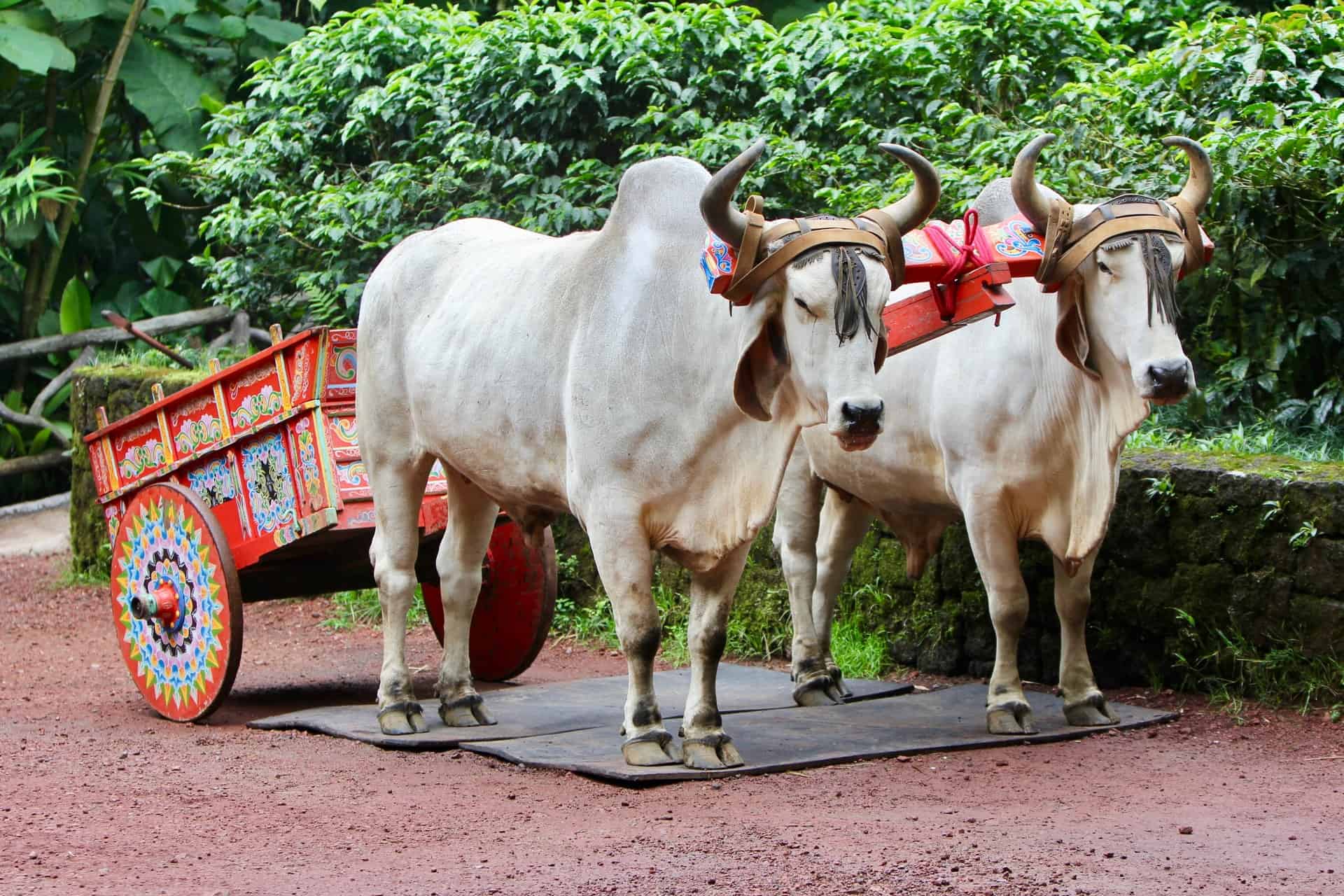
- San Isidro de El General (Pérez Zeledón): the town’s May fiestas in honor of San Isidro Labrador include a desfile de boyeros, a parade of oxcart drivers with their painted carts and teams of oxen.
- San Isidro de Heredia: the parish fiestas have included early masses held on local farms, a traditional blessing of animals, vehicles and people, a fairground with rides, food stalls run by parishioners and mascaradas (parades of giant costume heads) on May 15.
- Other towns named San Isidro: many hold smaller fiestas with masses, processions, food and music.
Programs change every year, and the main events often fall on the weekend nearest May 15 rather than on the 15th. Check the local parish or municipality’s social media pages in early May for the schedule. For more on mascaradas and other folk traditions, see our guide to traditional dances and folklore.
Why oxcarts matter
Before roads and trucks, oxcarts (carretas) hauled coffee from the Central Valley to the ports, and they remain the best-known symbol of rural Costa Rica. UNESCO recognizes Costa Rica’s oxherding and oxcart traditions as intangible cultural heritage. Besides the San Isidro fiestas, you can see oxcart parades on Día del Boyero (Oxcart Drivers’ Day) in San Antonio de Escazú, held in March, and at the national oxcart parade (Desfile Nacional de Boyeros) in San José, usually in late November. The town of Sarchí is known for its painted carts and workshops, and a small painted oxcart is a classic Costa Rica souvenir; see our Costa Rica souvenirs guide.
For visitors
How to Celebrate Farmers Day in Costa Rica as a Visitor
There’s no ticketed event to book. The best way to mark the day is to meet the people and food it honors.
- Shop at a feria. The ferias del agricultor (farmers markets) are where many Costa Ricans buy produce, often straight from the grower. Most towns have one or two market days a week, and the best selection is early in the morning. Bring small colón bills. See our Costa Rica farmers markets guide.
- Tour a coffee farm. Many farms in the Central Valley and coffee regions offer tours that cover planting, picking and processing. See our guides to coffee plantation tours and Costa Rican coffee from seed to cup.
- Visit the Central Market in San José. The city’s historic market has produce stalls, spices, cheese and small counters serving traditional food. See our Central Market guide.
- Eat at a soda. Sodas are small, family-run restaurants serving the rice, beans, plantains and vegetables farmers grow. Start with gallo pinto, then try a casado. Our Costa Rican food guide has more.
- Go to a San Isidro fiesta. If you’re near San Isidro de El General or San Isidro de Heredia in early to mid-May, the fiestas are the liveliest way to see rural traditions up close.
The farms
What Costa Rica’s Farmers Grow
Farming shaped Costa Rica’s history and still matters to its economy and culture. Coffee built the country’s early wealth in the 1800s and still grows in regions such as Tarrazú, the West Valley and Tres Ríos; our Costa Rica coffee guide covers the main regions. Bananas and pineapples, grown mostly on large lowland plantations, are among the country’s largest farm exports. For the home market, farmers grow rice, beans, potatoes, onions, vegetables and fruit, and raise dairy and beef cattle. The cattle tradition runs deepest in Guanacaste; see our guide to Guanacaste’s history and culture.
The highlands around Cartago grow much of the country’s vegetables, and on a drive through the area you’ll see steep fields of potatoes, onions and carrots. Small family farms are still common, and many feria vendors grow what they sell.
FAQ
Farmers Day in Costa Rica: FAQ
When is Farmers Day in Costa Rica?
May 15 every year. Its official name is Día del Agricultor Costarricense.
Is Farmers Day a public holiday in Costa Rica?
No. Schools, banks, offices, shops and tour operators open as usual. Schools often hold activities to recognize farmers.
Why is Farmers Day on May 15?
Law 4096 of 1968 set May 15 as the day. It’s also the feast day of San Isidro Labrador, the patron saint of farmers.
Who is San Isidro Labrador?
St. Isidore the Farmer, a farmworker from Madrid and the patron saint of farmers. Costa Rican towns named after him hold patron saint fiestas in May.
Where can I see an oxcart parade in Costa Rica?
In May at the San Isidro de El General fiestas, in March on Día del Boyero in San Antonio de Escazú, and at the national oxcart parade in San José, usually in late November. Dates change each year, so check locally.
How can tourists celebrate Farmers Day?
Shop at a local feria, tour a coffee farm, eat at a soda or visit a San Isidro fiesta if you’re nearby.
The short version
Farmers Day in Costa Rica is May 15. It honors farmers but isn’t a day off.
The liveliest celebrations are the San Isidro Labrador fiestas in May, with blessings, food and oxcart parades.
For visitors, a morning at a feria or a coffee farm tour is the best way to mark it.