
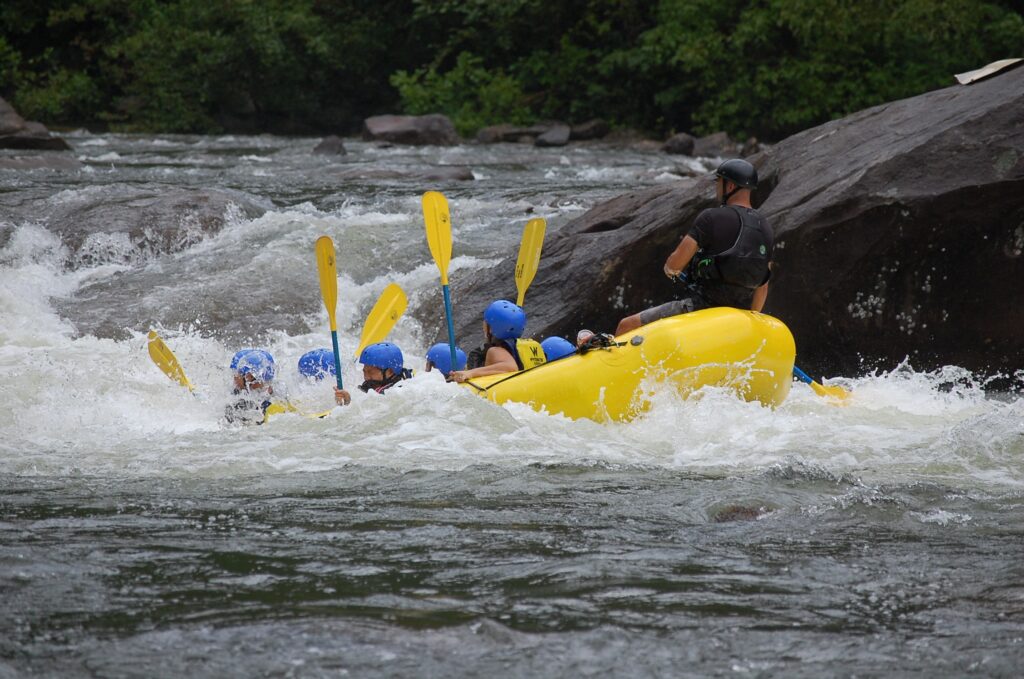
There’s a particular kind of laughter that only happens after a wave the size of a small car has just slammed into your raft. It’s part disbelief, part adrenaline, part “I can’t believe I paid to do this” — and in Costa Rica, it’s the soundtrack of one of the best rafting destinations on the planet.
Costa Rica’s combination of high mountain rain, steep terrain, and warm tropical water creates the kind of rivers most countries can only dream about. The Pacuare is regularly ranked in the global top five. The Sarapiquí runs through prime wildlife corridors. And there are mellower options where kids can paddle alongside parents without anyone getting in over their heads — sometimes literally.
This guide walks through how rafting difficulty actually works, which rivers match which travelers, when to go, and what to expect on the day. The goal is simple: by the end, you’ll know exactly which trip to book.
Understanding the difficulty scale
White water rafting difficulty is measured by the International Scale of River Difficulty — a six-class system that’s used the same way everywhere from the Grand Canyon to Costa Rica’s Caribbean slope. Knowing where each class sits is the single most useful thing a first-time rafter can do before booking.
One important thing to know: classes shift with the season. A Class III rapid in March can become a Class IV in October when the river is fat with rain. Reputable Costa Rican operators monitor flow daily and either reroute around or skip sections that aren’t safe at current levels.
For most fit, healthy adults with no experience, a Class III–IV river like the Pacuare is the right pick. For families with young children, nervous swimmers, or anyone who just wants the scenery without the chaos, stick to Class II–III. If a tour operator pushes you toward something harder than you’re comfortable with, find a different operator.
The best rivers for white water rafting in Costa Rica
You’ll see a lot of rivers mentioned online, but most travelers really only need to know about five. Here’s how they compare, ordered roughly from gentlest to most demanding.
Class I–II
This is the wildlife trip. The Chilamate stretch is a calm, scenic float through dense rainforest where the focus is on the toucans, sloths, and monkeys in the canopy above you. Almost no rapids. Perfect for families with young kids or anyone who doesn’t actually want adrenaline — they just want to be on a Costa Rican river.
Class II–III
The easiest “real” rafting in the country, and the most practical pick if you’re already in La Fortuna for the volcano. Enough rapids to feel like rafting, gentle enough that children as young as 8 can usually join. A good appetizer before a bigger river.
Class III–IV
The Sarapiquí’s whitewater section is the country’s best beginner-friendly Class III–IV trip. You get genuine technical rapids, hot tropical water, and excellent wildlife — spider monkeys, toucans, sloths — without the long drive to the Caribbean side. A solid alternative if the Pacuare is fully booked.
Class III–IV
The Reventazón tumbles out of the mountains near Turrialba, the same base town as the Pacuare. Its Florida section is a lively Class III run, while the Pascua section serves up big Class IV water for experienced paddlers. A hydroelectric dam controls the flow, so which sections are running depends on release schedules. Turrialba outfitters will know what’s on the day you go.
Class III–IV
The crown jewel, and one of the top five rafting rivers on Earth. The Pacuare runs through a protected gorge of rainforest you genuinely cannot reach any other way — waterfalls cascade straight into the river around you, indigenous Cabécar villages line the banks, and the rapids carry names like Terciopelo Snake, Double Drop, and Pinball. The classic day trip is around 18 miles of mostly Class III water with several big Class IV punches in the gorge. The two-day version, with a night at an eco-lodge inside the rainforest, is what most experienced rafters say was the highlight of their entire Costa Rica trip.
Class IV–V
The hardest commercially run section in Costa Rica. The El Chorro stretch crashes through a narrow, steep canyon with sustained Class V rapids that demand precise teamwork and prior whitewater experience. This is not a “first ever raft trip” option. Operators run it only when conditions allow, generally in the rainy season — and they’ll ask about your experience before they let you on the boat.
When to go: dry season vs. green season
Costa Rica’s rivers run year-round, but the same river can deliver two genuinely different experiences depending on when you visit. Most travelers’ instinct is to come in dry season — that’s not always the right call for rafting.
Dry season · Dec–Apr
Lower, clearer, more predictable water. Class IV sections often soften toward Class III. Sunny skies, better photos, fewer cancellations. Best for first-timers, families, and anyone who wants the scenery as much as the rapids.
Green season · May–Nov
Higher, faster, fuller rivers. Rapids step up by roughly half a class — Class III becomes Class IV, Class IV becomes serious. Afternoon thunderstorms are common but mornings are usually clear. Best for experienced rafters chasing bigger water.
September and October are the peak high-water months on most Caribbean-slope rivers. They produce the country’s biggest commercial rafting, but they’re also the months most likely to see a trip moved or cancelled if levels spike. If you’re set on the Pacuare and traveling in those months, build a buffer day into your itinerary.
What a day on the Pacuare actually looks like
Since the Pacuare is what most travelers end up booking, it’s worth knowing what you’re signing up for. The standard one-day trip from San José runs roughly like this:
5:00–6:00 AM · Hotel pickup in San José or La Fortuna. The drive to the operator’s base near Siquirres takes about two and a half to three hours, with a breakfast stop along the way.
9:00–10:30 AM · Arrival at the river, gear handout, and a thorough safety briefing. You’ll learn paddle commands in English (forward, back, left back, high side, get down) and what to do if you go overboard. They take this part seriously — pay attention.
10:30 AM–2:00 PM · On the river. The first few miles are warm-up Class II–III rapids, then the gorge opens up and the trip’s signature rapids start hitting one after another. You’ll stop along the way for swimming under waterfalls, photos, and a riverside picnic lunch.
2:00–5:00 PM · Take-out, change, real lunch at the base, and the drive back. Operators can usually drop you off in San José, La Fortuna, or Puerto Viejo de Talamanca instead of returning you to your starting point — making the Pacuare a great “transit” day between regions.
Use the rafting day as your travel day. Pacuare operators routinely shuttle travelers between San José, La Fortuna, and the Caribbean coast. You skip a boring transfer day and get a world-class river thrown in.
What to wear and bring
Operators provide everything you need to actually raft — helmet, life jacket (PFD), paddle, and the boat. What you bring is what you wear and what survives getting fully soaked.
Wear: swimsuit underneath; quick-dry shorts and a rash guard or athletic top over it; sandals with heel straps (Chacos, Tevas, Keens) or old sneakers you don’t mind wrecking. Skip: flip-flops, jeans, cotton shirts, or anything that holds water.
Bring: a small bag of dry clothes for the ride home, water-resistant sunscreen, and a strap for your sunglasses or prescription glasses (if you don’t tether them, the river takes them — guaranteed). Cash for tipping the guides is appreciated; around $10–$20 per person is standard for a one-day trip.
Phones don’t survive Costa Rican rafting. Even waterproof cases tend to fail under repeated impact in big rapids. If you want photos, either pay for the operator’s photographer (most have one) or mount a GoPro to your helmet. Otherwise, leave the phone in the dry bag at base.
How much does it cost?
Pricing in Costa Rica is fairly consistent across reputable operators because everyone offers a similar package: transport, guides, gear, breakfast, and lunch.
Half-day Lower Balsa or Sarapiquí trips generally run around $65–$90 per person. Full-day Pacuare trips typically land around $100–$120 per person including pickup from San José or La Fortuna. Two-day Pacuare with eco-lodge usually runs $350–$650 depending on the lodge, time of year, and group size.
Be skeptical of operators advertising significantly cheaper Pacuare trips. The river requires experienced bilingual guides, properly maintained gear, and emergency equipment — corners cut on safety aren’t worth the $20 you saved.
Choosing the right trip for you
Cut through everything above and the decision tree is simple:
Traveling with kids under 12, or want pure scenery? Sarapiquí Chilamate float (Class I–II), or the Lower Balsa from La Fortuna (Class II–III).
First-time rafter, fit and reasonably confident? The Pacuare day trip (Class III–IV). It is the trip most people come to Costa Rica for, and it’s genuinely accessible to beginners.
Want the full experience, not a day trip? Two- or three-day Pacuare with an eco-lodge stay deep in the gorge. This is the Costa Rica memory most rafters say was their best.
Experienced whitewater rafter looking for bigger water? Pacuare in green season, or the Naranjo’s El Chorro section near Manuel Antonio when conditions allow.
Costa Rica’s rivers are the rare kind of attraction that lives up to the marketing. The water is warm enough that falling in feels refreshing rather than punishing. The forest around you is the actual rainforest, with actual sloths and toucans, not a curated stand of trees by a parking lot. And the rapids — even the easy ones — are real rapids on real rivers.
Whichever river you end up choosing, you’ll come off the water tired, soaked, hungry, and grinning. That’s the whole point.