
You don’t need a biology degree or a week in the deep jungle to see Costa Rica’s wildlife. With the right park, a good guide and an early start, most visitors see sloths, monkeys and toucans in a single morning.
The Costa Rica animals travelers see most often are sloths, monkeys, coatis, toucans, scarlet macaws, crocodiles, poison dart frogs, sea turtles and whales. Manuel Antonio, Corcovado, Tortuguero, Cahuita and Carara national parks are the most reliable places to find them, and a local guide with a spotting scope will find far more than you will on your own. Jaguars, tapirs and quetzals live here too, but they take more luck or planning.
This guide covers nine animals you have a real chance of seeing, where and when to look for each, the rarer animals worth hoping for, and Costa Rica’s official national animals.
| Animal | Where to look | Odds |
|---|---|---|
| Sloths | Manuel Antonio, Cahuita, La Fortuna, Tortuguero | High with a guide |
| Monkeys | Manuel Antonio, Corcovado, Tortuguero, Guanacaste | Very high |
| Coatis | Manuel Antonio, Monteverde, Arenal, roadsides | High |
| Toucans | Caribbean and Pacific lowlands, Arenal | High |
| Scarlet macaws | Carara, Osa Peninsula | High in those areas |
| Crocodiles | Tárcoles River bridge, Tortuguero canals | Very high at Tárcoles |
| Poison dart frogs | Caribbean lowlands, Sarapiquí, Arenal | Good on a night or frog tour |
| Sea turtles | Tortuguero, Ostional, Osa | High in nesting season |
| Humpback whales | Marino Ballena (Uvita), Osa | Good in season |
The list
9 Costa Rica Animals You Can Actually See
1. Sloths
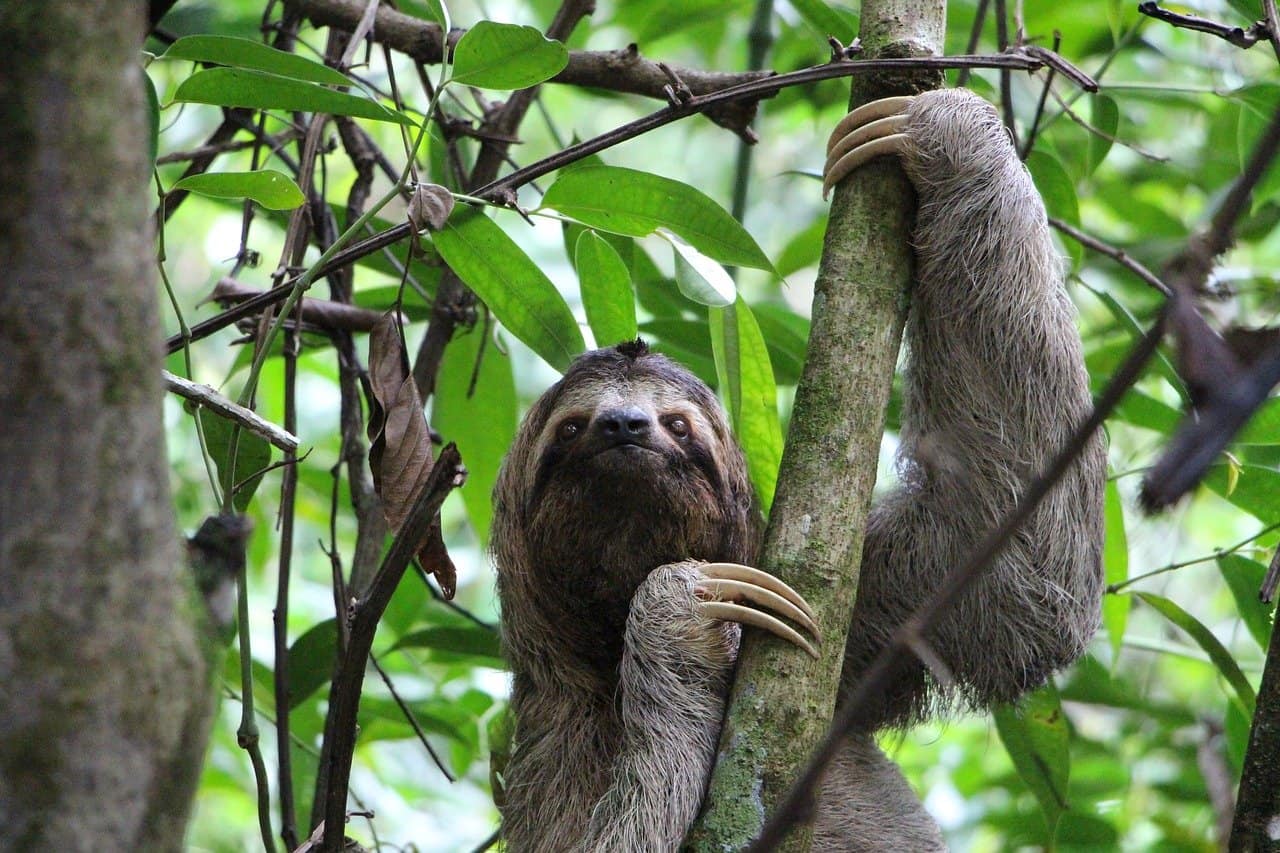
Costa Rica has two sloth species: the brown-throated three-toed sloth and Hoffmann’s two-toed sloth. Both became national symbols in 2021. They spend most of their lives high in the canopy and move so little that they’re easy to miss; a guide with a spotting scope finds them in minutes where you’d walk past. Manuel Antonio, Cahuita, Tortuguero and the forests around La Fortuna are reliable spots. Read our sloth facts for more.
2. Monkeys
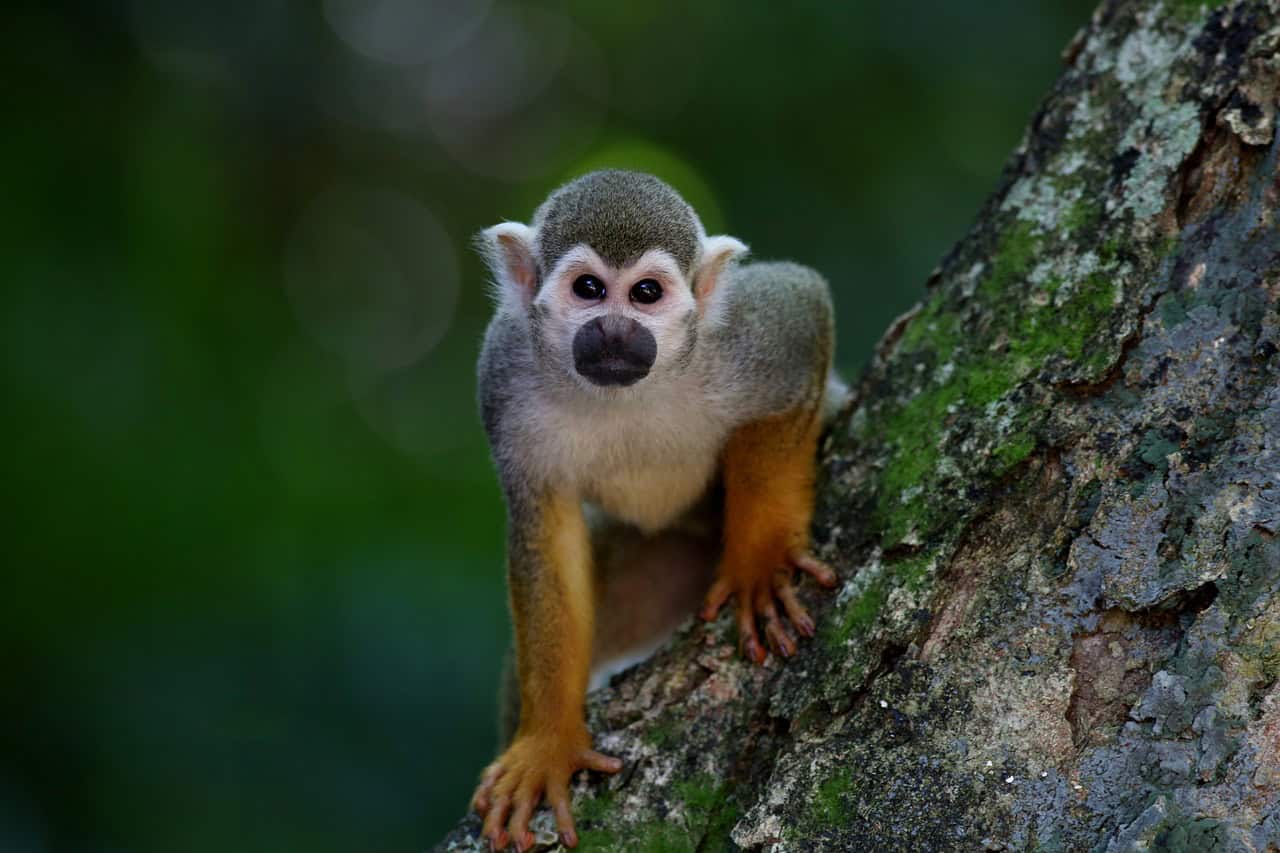
Four monkey species live in Costa Rica:
- Mantled howler monkey: the loudest, with a dawn roar you can hear from far away. Common on both coasts and in Guanacaste’s dry forest.
- White-faced capuchin: smart, curious and bold around people. See our guide to white-faced monkeys.
- Geoffroy’s spider monkey: long-limbed acrobats with a gripping tail. They’re endangered and shyer than the others.
- Central American squirrel monkey: small, fast and found only on the central and southern Pacific coast, mainly around Manuel Antonio and the Osa Peninsula.
Never feed monkeys. It’s prohibited in national parks, it makes them aggressive and it harms their health.
3. Coatis
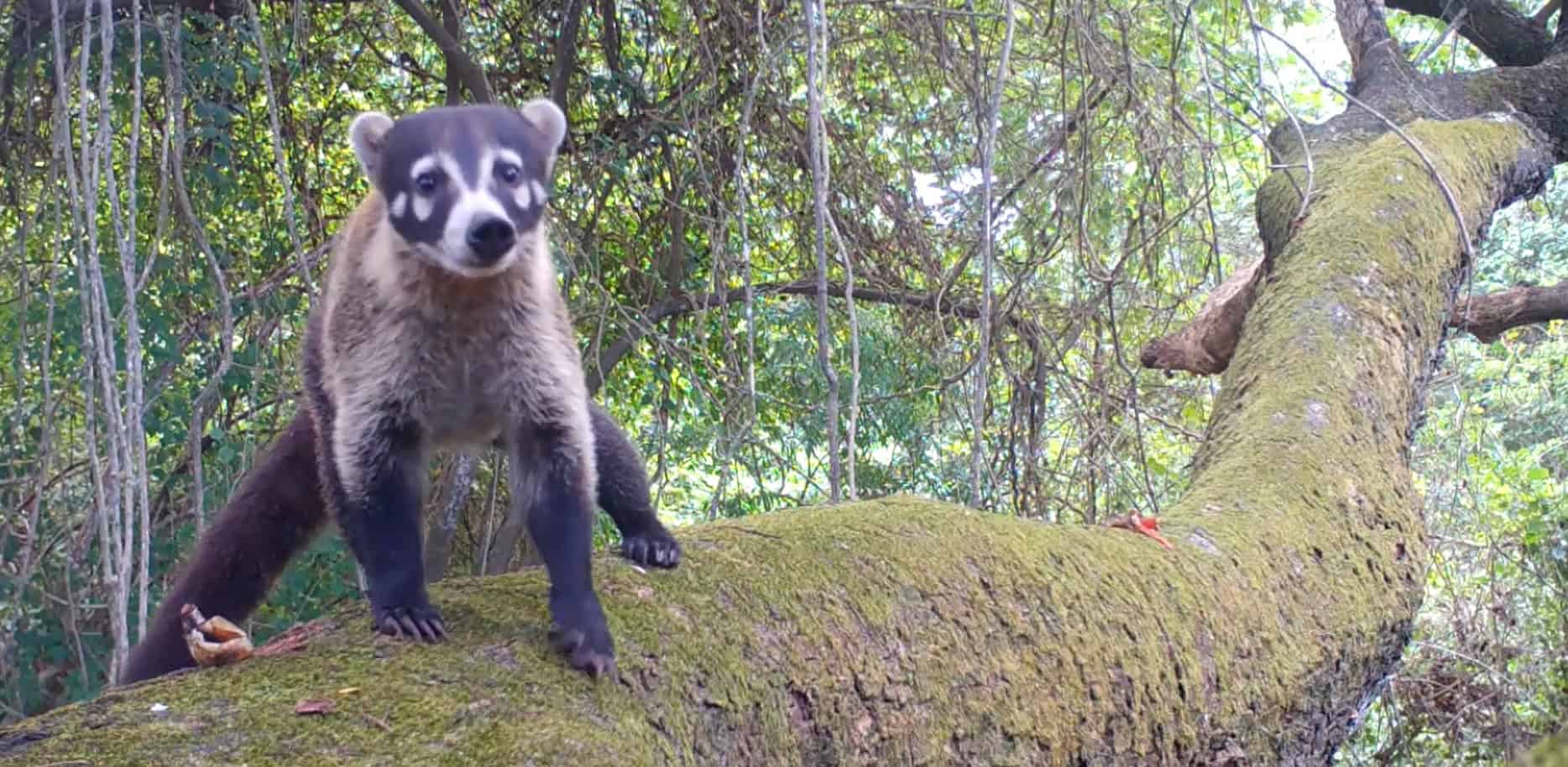
The white-nosed coati, or pizote, looks like a long-snouted raccoon with its tail held straight up. Females and young travel in noisy groups, while adult males often roam alone. You’ll see them on trails in Manuel Antonio and Monteverde and along roads near Arenal, where some have learned to beg from cars. Don’t feed them; coatis that lose their fear of people get hit by cars and can bite.
4. Toucans
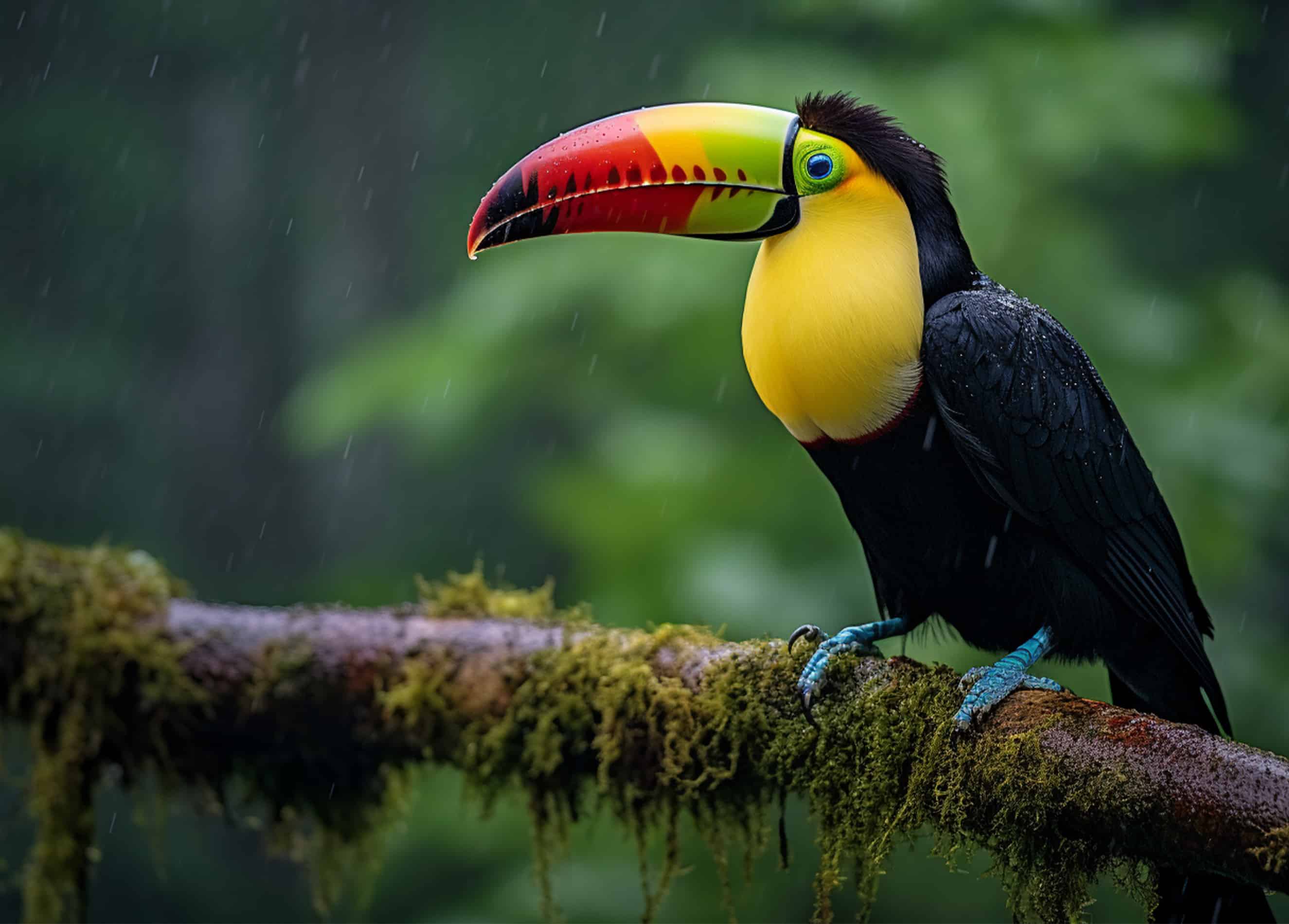
Costa Rica has six toucan species. The two big ones are the keel-billed toucan, with its rainbow bill, and the larger yellow-throated toucan, whose yelping call carries through lowland forest. Collared and fiery-billed aracaris travel in small flocks, the emerald toucanet lives in cloud forests like Monteverde, and the yellow-eared toucanet is rare. Fruiting trees near lodges are the easiest places to see them. Read our guide to toucans in Costa Rica.
5. Scarlet macaws

You’ll usually hear scarlet macaws before you see them: pairs and small flocks fly over squawking, red, blue and yellow against the sky. The most reliable places are Carara National Park and the surrounding Tárcoles area on the central Pacific, and the Osa Peninsula, where they feed in beach almond trees. The rarer great green macaw lives in the northern Caribbean lowlands.
6. American crocodiles

The easiest wildlife sighting in the country is the crocodile bridge over the Tárcoles River on Route 34, between San José and Jacó, where dozens of large American crocodiles bask on the sandbanks below. Park in a guarded lot, walk on the bridge sidewalk, and don’t leave valuables in the car. Crocodiles also live in many rivers and estuaries on both coasts, so don’t swim at river mouths. Our guide to crocodile safety for surfers covers the risks.
7. Poison dart frogs and red-eyed tree frogs
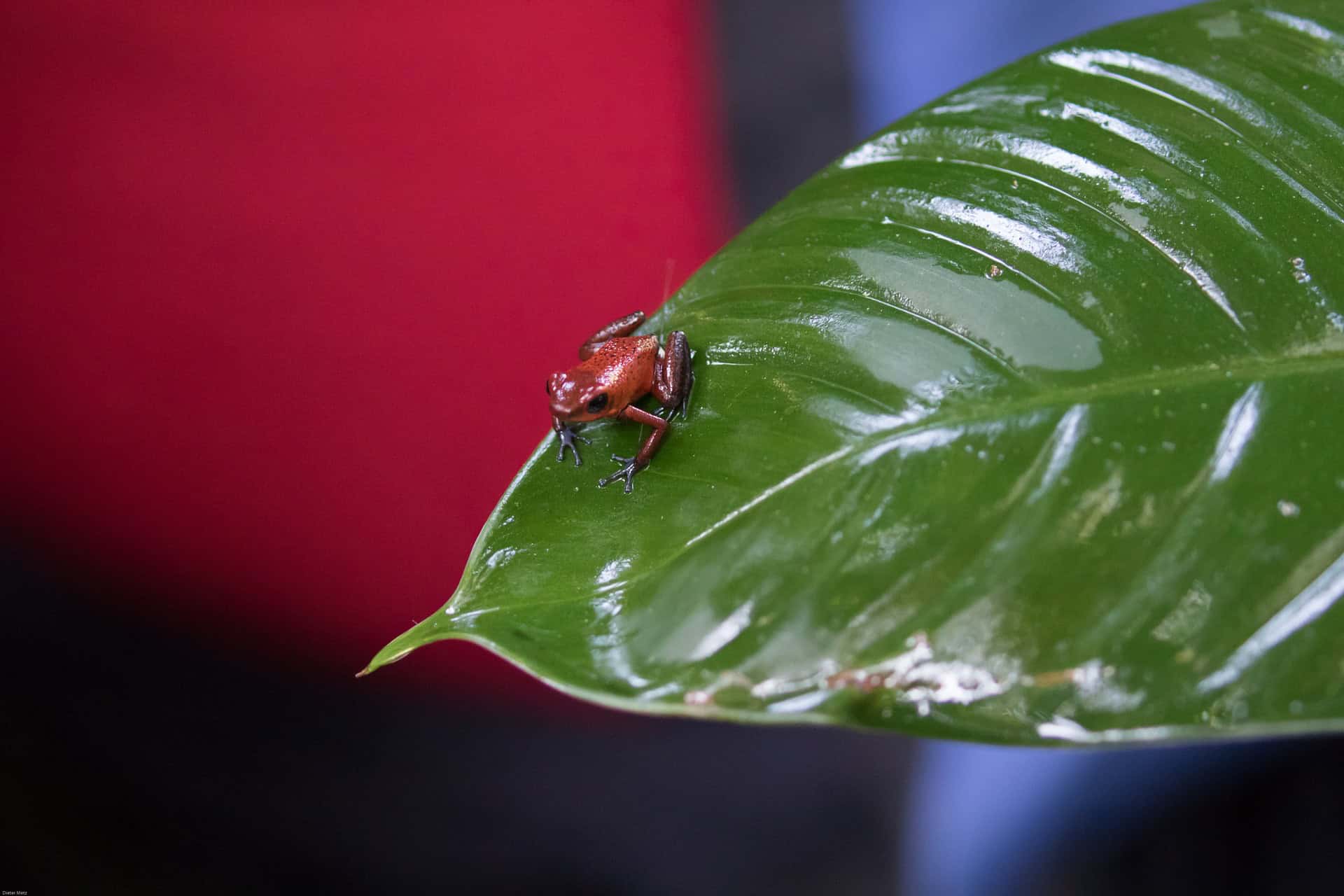
The tiny red-and-blue strawberry poison dart frog is common in the Caribbean lowlands, from Sarapiquí to Cahuita, where it hops across the forest floor in daylight. Its bright color warns predators that its skin is toxic, so look but don’t touch. The red-eyed tree frog, the green frog with orange feet on so many postcards, is harmless and easiest to find on a guided night walk. See our guide to the poison dart frog.
8. Sea turtles
Costa Rica’s beaches are nesting grounds for green, olive ridley, leatherback and hawksbill turtles. Tortuguero, on the Caribbean coast, is one of the most important green turtle nesting beaches in the Western Hemisphere, with the main season from July to October. On the Pacific, Ostional is famous for arribadas, mass nesting events when thousands of olive ridleys come ashore over several nights, most often in the rainy season. In Tortuguero, night turtle tours require a certified guide, and lights and flash photography aren’t allowed on the nesting beach. Read our guide to Costa Rica’s sea turtles for nesting seasons by beach.
9. Humpback whales and dolphins
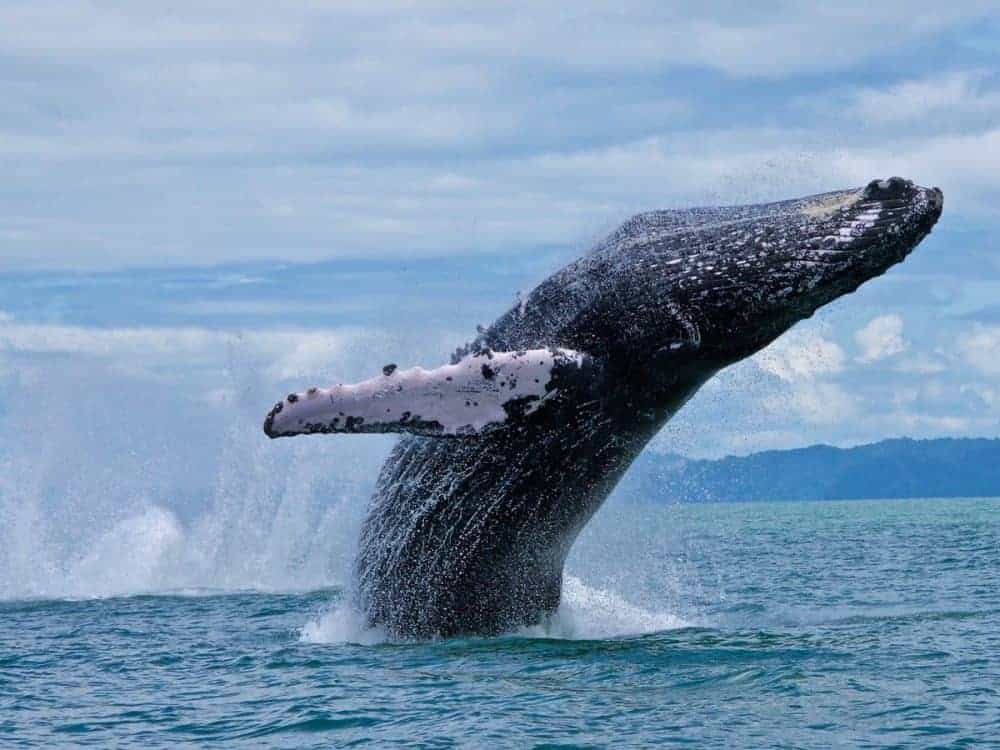
Humpback whales visit Costa Rica’s southern Pacific coast twice a year: southern-hemisphere whales from about July to November and northern-hemisphere whales from about December to April. That gives the area around Marino Ballena National Park in Uvita and the Osa Peninsula one of the longest whale seasons anywhere. Bottlenose and spotted dolphins are seen year-round on many boat trips. See our whale watching guide.
Harder to see
Rare Animals Worth Hoping For
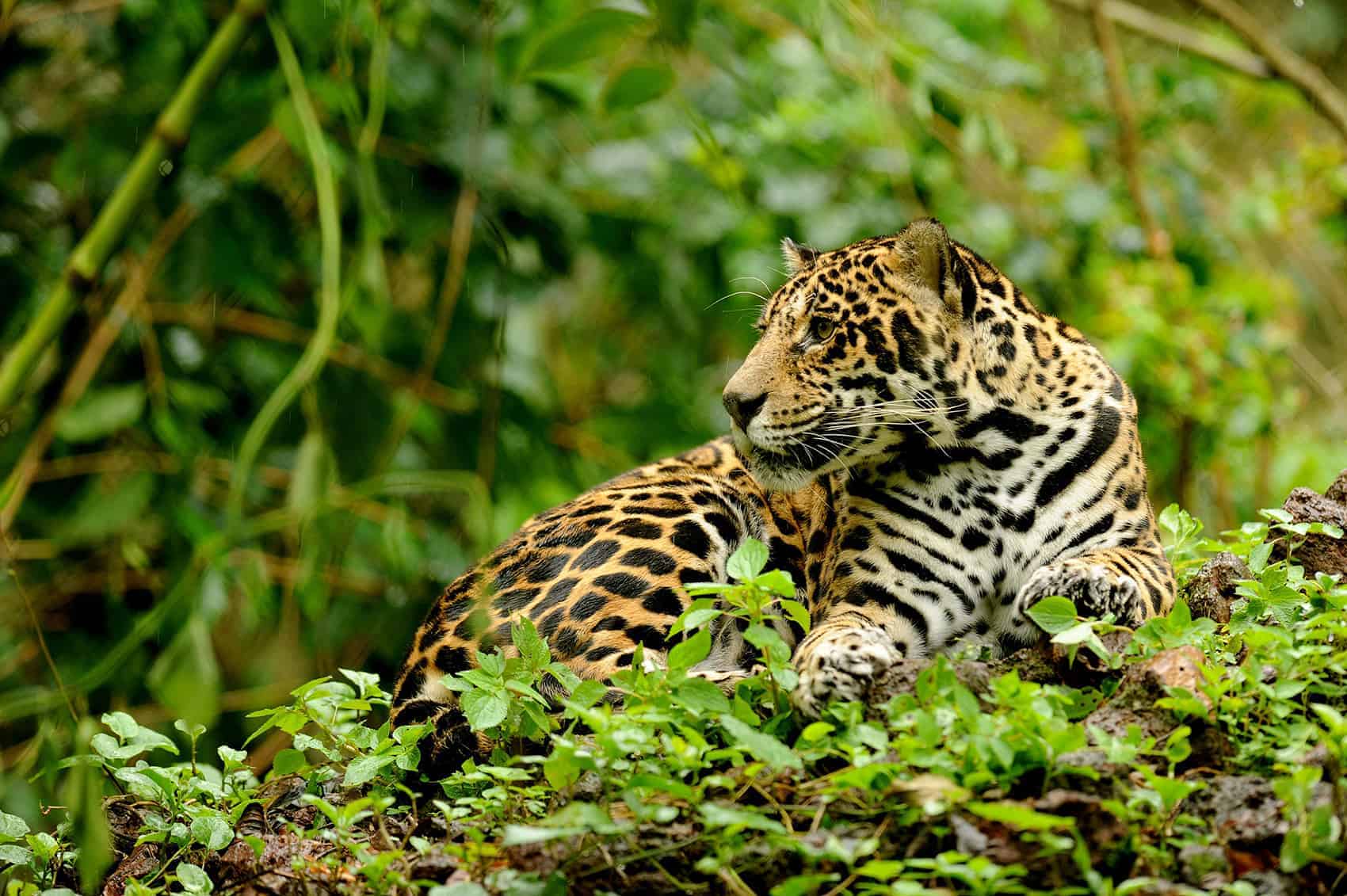
- Jaguar: the largest cat in the Americas lives in Corcovado, Tortuguero and other large protected forests, but sightings are rare even for guides. Tracks are more likely than the cat.
- Baird’s tapir: Central America’s largest land mammal, endangered and mostly nocturnal. Corcovado’s Sirena station and some highland parks offer the best chances.
- Resplendent quetzal: a cloud-forest bird with long green tail feathers, best seen in San Gerardo de Dota and Monteverde. Read our quetzal guide.
- Ocelot and other wild cats: present in many forests, rarely seen except on lucky night walks.
- West Indian manatee: lives in Caribbean rivers and lagoons around Tortuguero and Gandoca-Manzanillo, but sightings are uncommon.
Symbols
What Is the National Animal of Costa Rica?
Costa Rica has several official animal symbols rather than one:
- White-tailed deer: declared a national symbol of Costa Rica’s wildlife in 1995, and often called the national animal.
- Clay-colored thrush (yigüirro): the national bird since 1977, chosen for its song, which locals associate with the start of the rainy season. Read about the national bird.
- West Indian manatee: national symbol of marine wildlife since 2014.
- Sloths: both native species became national symbols in 2021.
Tips
How to See More Wildlife in Costa Rica
- Hire a guide. A good naturalist guide with a spotting scope finds animals you’d never see on your own. Many parks have certified guides at the entrance.
- Go early. Animals are most active in the first hours after sunrise. Arrive when the park opens.
- Book a night walk. Frogs, snakes, tarantulas, kinkajous and sleeping birds come out after dark.
- Buy park tickets ahead. Popular parks like Manuel Antonio sell timed entries online. See our guide to buying park tickets on SINAC.
- Keep your distance and never feed animals. Feeding wildlife is prohibited in national parks and harms the animals.
- Time your trip. Turtle nesting, whale seasons and bird migrations vary by month. Our month-by-month wildlife calendar helps you plan.
Good to know
Costa Rica Animals FAQ
What animals can you see in Costa Rica?
The most commonly seen animals are sloths, four monkey species, coatis, toucans, scarlet macaws, American crocodiles, poison dart frogs, sea turtles in nesting season and humpback whales in season. Jaguars, tapirs and quetzals live here too but are harder to see.
What is the national animal of Costa Rica?
The white-tailed deer, declared a national symbol of Costa Rica’s wildlife in 1995, is usually called the national animal. The clay-colored thrush is the national bird, and sloths and the West Indian manatee are also national symbols.
Where is the best place to see animals in Costa Rica?
Manuel Antonio is the easiest park for a first-timer, Corcovado has the richest wildlife, Tortuguero is best for turtles and Caribbean species, and Carara is the top spot for scarlet macaws near San José.
How many monkey species are in Costa Rica?
Four: the mantled howler, the white-faced capuchin, Geoffroy’s spider monkey and the Central American squirrel monkey.
Are there dangerous animals in Costa Rica?
Some, but problems are rare. Crocodiles live in many rivers and estuaries, several venomous snakes live in forests, and poison dart frogs shouldn’t be handled. Stay on trails, watch where you step and don’t swim at river mouths.
Will I see a jaguar in Costa Rica?
Probably not. Jaguars live in large protected areas like Corcovado and Tortuguero, but they’re secretive and rarely seen, even by guides.
The short version
Sloths, monkeys, toucans, macaws and crocodiles are easy to see with a guide in the right park.
Go early, book a night walk and time your trip for turtles or whales if they’re on your list.
Keep your distance and never feed wildlife.