
The TicoTravel cafe finder below lets you search Costa Rica cafes by town and check what matters before you drive there: where the coffee comes from, the road in, WiFi and laptop rules, opening status and how you can pay. Use it to find coffee near you, then read on for what a cup costs, how to order in Spanish, how to work from a cafe and how to put the finder on your phone’s home screen.
| Costa Rica cafes | At a glance |
|---|---|
| Search by | Town, or browse the full list |
| Rated on | Road access, open status, coffee origin, WiFi and laptop rules, price and payment |
| Typical price | About ₡1,800 to ₡2,300 for an espresso or cappuccino at a city cafe (mid-2025) |
| Payment | Cards in cities and tourist towns; carry colones for small and rural cafes |
| Power | 120 volts, US-style plugs; outlets can be scarce |
| On your phone | Save the full-screen finder page to your home screen |
On the road? The finder also has its own full-screen page. That’s the one to add to your phone’s home screen; the steps are below.
Near you
How to Find Coffee Near You in Costa Rica
Search the finder by the town you’re in or heading to, then open a listing to check the details. A few habits make it more useful:
- Check open status before you drive. Small cafes keep short hours and close on slow days, and a sign on the door isn’t always current.
- Read the road note on mountain listings. The cafes with the best views are often at the end of the worst roads.
- Screenshot listings before you leave WiFi. Signal drops in the mountains and on the Osa Peninsula, and a screenshot of hours, WiFi and payment works anywhere.
The ratings
What the Cafe Finder Rates
Photos already show you the décor, so every listing covers the practical details instead:
- Location and road access. Is the last stretch paved, and will a standard rental car make it?
- Open status. Open or closed right now, rather than only the posted hours.
- Coffee quality and origin. The growing region or farm where it’s known, and who roasted it.
- WiFi and laptop tolerance. Connection quality, outlets, and how long you can reasonably stay with a laptop.
- Price and payment. What an espresso costs in colones, and which cards, apps and currencies are accepted.
The coffee
Why Good Costa Rica Cafes Take Some Finding
Costa Rica has eight coffee-growing regions, from Tarrazú and the West Valley to Tres Ríos, Orosi, Turrialba, the Central Valley, Guanacaste and Brunca. Much of the top specialty coffee is exported, because it sells for more abroad. What stays home ranges from single-farm micro-lots to anonymous supermarket coffee, and almost all of it is honestly labeled “100% Costa Rican.”
That’s why origin is the useful detail. A cafe that names a farm, a micro-mill or a region is making a claim you can check. “Café de Costa Rica” alone tells you very little. Our guide to Costa Rican coffee regions explains how they differ, and a coffee tour shows you the process on a farm.
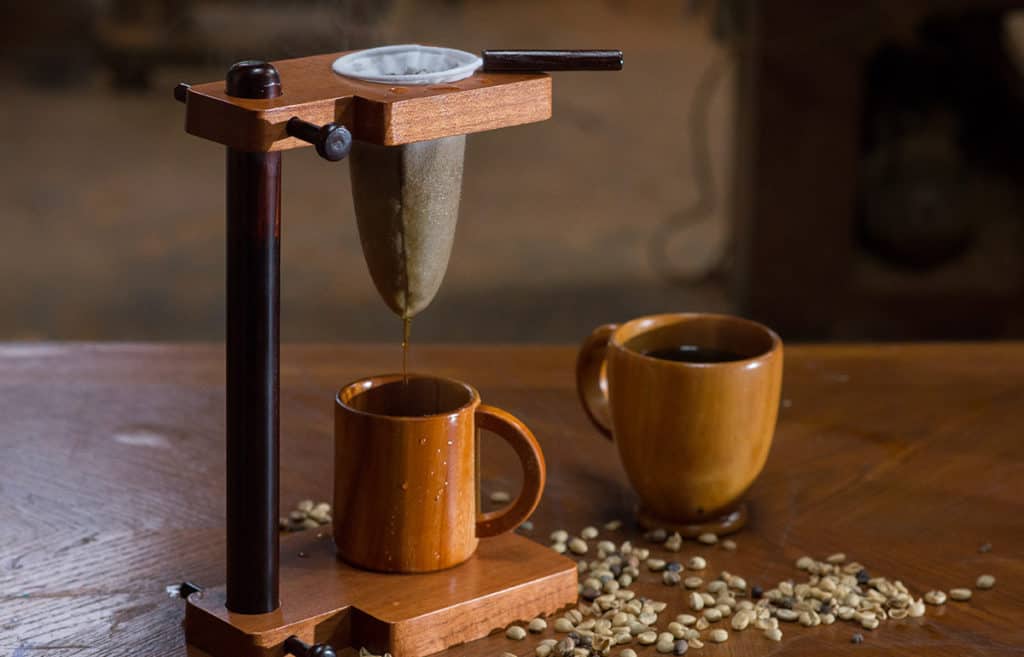
Many sodas and roadside stops serve the everyday Tico style: dark, strong and often sweetened, sometimes with hot milk. It’s a different tradition, not a worse version, and much of it is still brewed through a cloth filter on a wooden stand called a chorreador. Ordering it and complaining that it isn’t a flat white is one of the coffee culture mistakes tourists make.
Remote work
Working From a Costa Rica Cafe: WiFi, Outlets and Etiquette
Fast WiFi and a welcome for laptops are two separate questions, which is why the finder rates them separately. A cafe can have fiber and still expect your table back within the hour; another can run on a slower connection and let you stay all afternoon.
- Connection type. Fiber is common in San José and the larger beach towns. In rural areas, satellite internet such as Starlink now fills many of the gaps, so a remote cafe can sometimes beat the capital on speed.
- Outlets. Open-air cafes may have one or two outlets for the whole room. Costa Rica uses 120 volts with US-style plugs, so North American chargers work without an adapter. Our power outlet guide has the details.
- Etiquette. Order something every hour or so, skip calls without headphones, and give up a big table at lunch.
- Backup. A local SIM or eSIM lets you hotspot when the cafe WiFi drops.
Getting there
Road Access: Check Before You Drive
A cafe 15 minutes away on the map can take 45 minutes on a steep gravel road, and in the rainy season some approaches aren’t passable in a small sedan. Each listing flags the road so you can decide before you’re at a fork in a dirt track. If you haven’t driven here before, read our guide to driving in Costa Rica first.
Prices and paying
What Coffee Costs and How to Pay
In mid-2025, an espresso or cappuccino at a San José cafe typically cost about ₡1,800 to ₡2,300, which is high by Latin American standards. Specialty cafes in the capital and beach towns sit at the top of that range; a cup of chorreado at a soda usually costs less. Listings show the espresso price in colones so you can compare.
- Cards: Visa and Mastercard are widely accepted in cities and tourist areas. American Express is accepted less often.
- Cash: Small and rural cafes may not take cards. Keep ₡1,000 and ₡2,000 bills; a ₡20,000 note is hard to break at a small counter. See our guide to cash in Costa Rica.
- SINPE Móvil: the phone-payment system most Costa Ricans use. It generally requires a local bank account; see our guide to SINPE Móvil for tourists.
- Dollars: Some tourist-area cafes accept US dollars, but change usually comes back in colones at the cafe’s own rate.

Useful Spanish
How to Order Coffee in Spanish
English is common in tourist-area cafes, but a few words help everywhere else:
| Spanish | English |
|---|---|
| Un café negro, por favor. | A black coffee, please. |
| Café con leche | Coffee with hot milk |
| Café chorreado | Coffee brewed in a chorreador |
| Sin azúcar | Without sugar |
| Para llevar / para tomar aquí | To go / to have here |
| ¿Cuál es la clave del WiFi? | What’s the WiFi password? |
| ¿Aceptan tarjeta? | Do you take cards? |
On your phone
Add the Cafe Finder to Your Phone
You usually need the finder when you have one bar of signal and a decision to make. Adding it to your home screen takes about 30 seconds and gives you an icon that opens full screen.
- iPhone: open the finder page in Safari, tap Share, choose Add to Home Screen and tap Add. If the option is missing, scroll to the bottom of the share sheet, tap Edit Actions and add it.
- Android: open the finder page in Chrome, tap the three-dot menu and choose Add to Home screen. Some versions call it Install app.
FAQ
Costa Rica Cafes FAQ
How do I find a good coffee shop near me in Costa Rica?
Search the cafe finder on this page by town. Each listing shows coffee origin, road access, open status, WiFi and laptop rules, and payment methods, so you can pick a cafe before you drive.
How much does coffee cost in Costa Rica?
In mid-2025, an espresso or cappuccino at a San José cafe typically cost about ₡1,800 to ₡2,300. Coffee at a soda usually costs less, and specialty cafes in tourist areas sit at the top of the range.
Do Costa Rican cafes take credit cards?
Most cafes in cities and tourist towns take Visa and Mastercard. Small and rural cafes may take cash only, and American Express is accepted less often. Carry colones in small bills.
Can I work from cafes in Costa Rica?
Yes, at many of them. WiFi is usually good in San José and the larger beach towns, but outlets and laptop welcome vary, which is why the finder rates laptop tolerance separately from WiFi.
Why does coffee in Costa Rica taste different from the Costa Rican coffee I buy at home?
Much of the specialty harvest is exported, and the everyday local style is darker and often sweetened. Cafes that name a specific farm or micro-mill usually serve something closer to what you’ve had abroad.
Do I need to speak Spanish to order coffee?
Not in tourist areas. Elsewhere, “un café negro” gets you black coffee, “con leche” adds milk and “para llevar” means to go.
The short version
Search the finder by town, check open status and road access, then go.
Look for cafes that name the farm or region; carry small colón bills.
Take the brewing method home: our Costa Rica coffee guide covers how to make it.