
Dominical, Costa Rica, is a small surf town on the southern Pacific coast, about 3.5 hours’ drive from San José’s airport. It’s known for powerful waves, a rough main beach and a mix of surfers, backpackers and long-stay foreigners. It also makes a practical base for Nauyaca Waterfalls, the Whale’s Tail at Uvita and quieter beaches to the south. Go if you want surf, rainforest and a small-town feel; skip it if you want calm swimming right outside your door.
This guide is for first-time visitors planning a stop in Dominical. It covers getting there, where to stay, swimming and surf safety, the best nearby beaches, things to do and when to go.
| Dominical, Costa Rica | At a glance |
|---|---|
| Location | Southern Pacific coast on Route 34, 30 to 45 minutes south of Quepos and 20 minutes north of Uvita |
| From SJO | About 3.5 hours by car via Route 27 and Route 34 |
| From Liberia | About 5 to 6 hours by car |
| Main beach | Strong surf and rip currents; lifeguards on the main beach |
| Best for | Intermediate and advanced surfers, hikers, budget and mid-range travelers |
| Driest months | December to April; February and March are driest |
| Rainiest month | October |
| Time needed | Two to four nights |
Getting there
How to Get to Dominical, Costa Rica
By car
Driving is the most flexible option. From Juan Santamaría International Airport (SJO), take Route 27 west to the coast, then Route 34, the Costanera Sur, south past Jacó and Quepos. The drive takes about 3.5 hours without stops, and the road is paved the whole way. The mountain route through San Isidro de El General is slower and crosses the Cerro de la Muerte pass, so most drivers use the coast road.
From Liberia’s airport (LIR), plan on 5 to 6 hours. Flying into San José usually makes more sense for a Dominical-focused trip.
A regular car works if you stay in town or along the highway. Many hillside hotels and restaurants sit on steep gravel roads where you’ll want a 4×4 or at least high clearance. See our guides to Costa Rica car rental and driving in Costa Rica.
By bus
Tracopa runs direct buses from its terminal in south San José toward Uvita, usually early morning and mid-afternoon. Ask the driver to let you off in Dominical. Expect 4 to 5 hours and a fare of roughly $12 to $15. Local buses also connect Dominical with Quepos and San Isidro. Schedules change, so confirm at the terminal. Our Costa Rica bus guide covers terminals and tickets.
Shuttles and flights
Shared and private shuttles run from San José, the airport and other tourist towns. Private transfers are priced per vehicle, which works out well for families and groups.
There’s no airport in Dominical. The closest is Quepos (XQP), served by SANSA and Costa Rica Green Airways on 20- to 30-minute flights from San José. Quepos is 30 to 45 minutes’ drive north of Dominical, so arrange a taxi, shuttle or rental car pickup in advance. See Costa Rica domestic airlines and our Costa Rica airport guide.
Where to stay
Where to Stay in Dominical
- In town: hostels, cabinas and small hotels within walking distance of the beach, bars and restaurants. Best if you don’t have a car.
- The beach road: a strip of hotels and surf schools running along the sand south of the main street. Easy beach access, still walkable to town.
- The hills (Escaleras and nearby): villas and boutique hotels with ocean views, cooler air and more wildlife. You’ll need a car, often a 4×4, for steep access roads.
- Dominicalito: quieter, with a calmer beach a few minutes south of town.
- Uvita: 20 minutes south, with more services and easy access to Marino Ballena National Park. A good alternative base if whales are your priority.
Book early for December through April, the Christmas and Easter holidays, and early September, when Uvita holds its whale festival.
The beach
Is It Safe to Swim in Dominical?
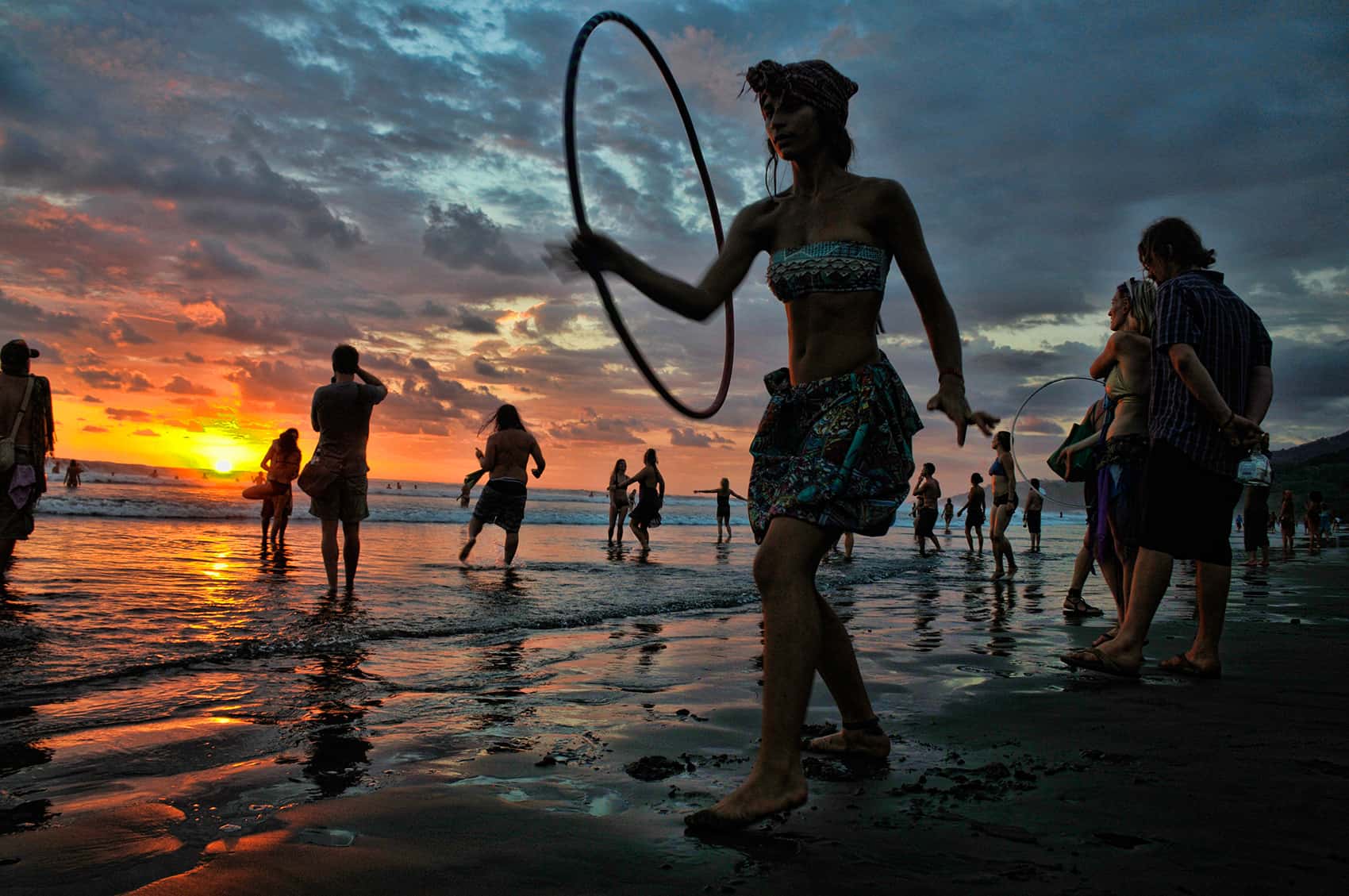
Playa Dominical is a long, dark-sand beach with heavy surf and strong rip currents. It’s a surf beach, not a swimming beach, and conditions can turn dangerous fast.
The main beach has a local lifeguard program, Guardavidas Costa Ballena, which has patrolled it since 1996. Swim only near the lifeguard towers, follow their flags and instructions, and stay out of the water if you aren’t a strong swimmer. For calmer water, go to Dominicalito or wait for low tide at sheltered coves to the south.
Surf
Surfing in Dominical
Dominical is a powerful beach break that picks up swell year-round. It suits intermediate and advanced surfers; beginners will struggle on all but the smallest days.
- Main beach: best around mid to high tide. Close to unsurfable at dead low tide.
- Dominicalito: usually knee- to waist-high and a common spot for lessons.
- Playa Hermosa (near Uvita): smaller and less powerful than Dominical, good for beginners and intermediates.
- Playa Ventanas: fine for beginners when it’s small; it closes out when the swell builds.
Surf schools in town run lessons and rent boards, and most take beginners to the gentler beaches nearby. For planning help, see our guide to planning a Costa Rica surf trip.
Things to do
Best Things to Do in Dominical
Nauyaca Waterfalls
Two tiers of falls and a large swimming pool in the forest, about 20 to 30 minutes’ drive inland from Dominical. You can hike in or pay for 4×4 transport, depending on the entrance. See our Nauyaca Waterfalls guide for entrances, prices and hours.

Hacienda Barú National Wildlife Refuge
A private refuge about 5 minutes north of town, covering roughly 330 hectares (815 acres) of rainforest, mangroves and beach. It’s open daily, with about 7 kilometers of trails. Self-guided entry runs about $20; guided hikes, early bird walks, night tours and a canopy tour cost extra. Go early for the most wildlife.
Marino Ballena National Park and whale watching
Twenty minutes south in Uvita, this marine park protects the Whale’s Tail, a sandbar shaped like a whale’s fluke that you can walk out on at low tide. Entry is about $6 plus tax for foreign adults. Check a tide chart and arrive before low tide. Humpback whales visit from about July to November and December to April, with August to October the strongest stretch. Read our guides to Marino Ballena National Park and whale watching in Costa Rica.
Day trip to Manuel Antonio
Manuel Antonio National Park is about an hour north. It’s closed on Tuesdays, and tickets are sold only online in advance, so book before you drive up. See our Manuel Antonio National Park guide.
Food and money
Eating, Groceries and Cash
Dominical has more places to eat than its size suggests: beach bars, cafes, taco and seafood spots, plus a few sodas, the small family-run restaurants that serve a casado (rice, beans, salad and a protein) at local prices. The road to the beach is lined with artisan stands. The town also has mini-markets and a supermarket for basics; Uvita has more shops.
Dominical has ATMs, but it’s a small town. Carry some colones or small US bills as a backup, and use a card where you can. See do you need cash in Costa Rica.
When to go
Best Time to Visit Dominical
- December to April: the dry season, with the sunniest weather and the most visitors. February and March are the driest months.
- May to November: the rainy season. Mornings are often clear, with storms in the afternoon. Hotels are cheaper and the forest is at its greenest.
- October: usually the rainiest month. Heavy rain can flood rivers and roads.
Daytime temperatures stay around 85°F (29°C) all year, and it’s humid. Check the Costa Rica weather forecast before you go.
Safety
Dominical Safety Tips
- Don’t leave anything on the beach while you swim or surf, and leave nothing visible in a parked car.
- Use a taxi or ride after dark instead of walking unlit roads alone.
- Never drive or wade across a flooded river or road during heavy rain.
- The emergency number is 911.
For more, see our Costa Rica safety tips.
Avoid these
Common Mistakes First-Timers Make
- Swimming at the main beach away from the lifeguards, or in big surf.
- Booking a hillside villa without a 4×4.
- Showing up at the Whale’s Tail at high tide.
- Planning a Manuel Antonio day trip for a Tuesday.
- Arriving with no backup cash.
FAQ
Dominical, Costa Rica FAQ
How far is Dominical from San José?
About 3.5 hours by car from San José’s airport via Route 27 and the coastal Route 34. The bus takes 4 to 5 hours.
Is Dominical good for beginner surfers?
The main beach is powerful and better for intermediate and advanced surfers. Beginners usually learn at Dominicalito or Playa Hermosa near Uvita.
Can you swim at Playa Dominical?
Only with care. The beach has strong rip currents. Swim near the lifeguard towers and follow their flags, or use calmer beaches like Dominicalito.
Do you need a 4×4 in Dominical?
Not for the drive from San José or for staying in town. Many hillside hotels and restaurants sit on steep gravel roads where a 4×4 or high-clearance vehicle helps.
Dominical or Uvita: which is the better base?
Dominical suits surfers and travelers who want a small, walkable town with bars and restaurants. Uvita is 20 minutes south, quieter, closer to Marino Ballena National Park and better for whale watching.
How many days do you need in Dominical?
Two to four nights covers the beach, Nauyaca Waterfalls, Hacienda Barú and a trip to the Whale’s Tail in Uvita.
The short version
Drive from SJO in about 3.5 hours on the coastal route; rent a 4×4 if you’re staying in the hills.
Surf or watch the waves at the main beach; swim near the lifeguards or at Dominicalito.
Add Nauyaca Waterfalls, Hacienda Barú and the Whale’s Tail at low tide.