
Most “fun facts about Costa Rica” lists recycle the same lines, and a surprising number of them are wrong. The national bird isn’t a toucan, there are no wild capybaras, and the volcano everyone photographs hasn’t erupted in years. Here’s the version that holds up.
The most interesting Costa Rica fun facts: the country abolished its army in 1948, gets nearly all of its electricity from renewable sources in a normal year, protects about a quarter of its land, and made the sloth a national symbol. Its people call themselves Ticos, its unofficial motto came from a Mexican movie, and it never changes its clocks.
- 1948The year Costa Rica abolished its army
- ~25%Share of the country’s land in protected areas
- ~98%Renewable share of electricity in a normal year
History
Facts about Costa Rica’s history and government
- It has no army. Costa Rica abolished its military on Dec. 1, 1948, after a short civil war, and the 1949 Constitution bans a permanent army. Civilian police handle security. Read why Costa Rica has no army.
- San José wasn’t the first capital. Cartago held the title through the colonial period. San José took over in 1823 after the Battle of Ochomogo. Here’s how San José became the capital.
- Coffee built the National Theatre. San José’s opera house, opened in 1897, was paid for largely with coffee money. You can still tour it or catch a show; see our National Theatre article.
- The flag’s colors are defined by law. Blue for the sky, white for peace and red for the blood of those who died for freedom. The design dates to 1848. More on the Costa Rica flag.
Nature
Facts about Costa Rica’s nature and wildlife
- It packs in a lot of life. Costa Rica covers roughly 0.03 percent of the planet’s land but is commonly estimated to hold about 6 percent of its biodiversity.
- About a quarter of the land is protected. Some 25.5 percent of the country sits in protected areas, and forest covers close to 60 percent. See how much of Costa Rica is protected.
- Its power grid runs on water, heat and wind. In a normal year about 98 percent of electricity comes from renewable sources, mostly hydropower, with geothermal and wind. Drought years can pull that share down.
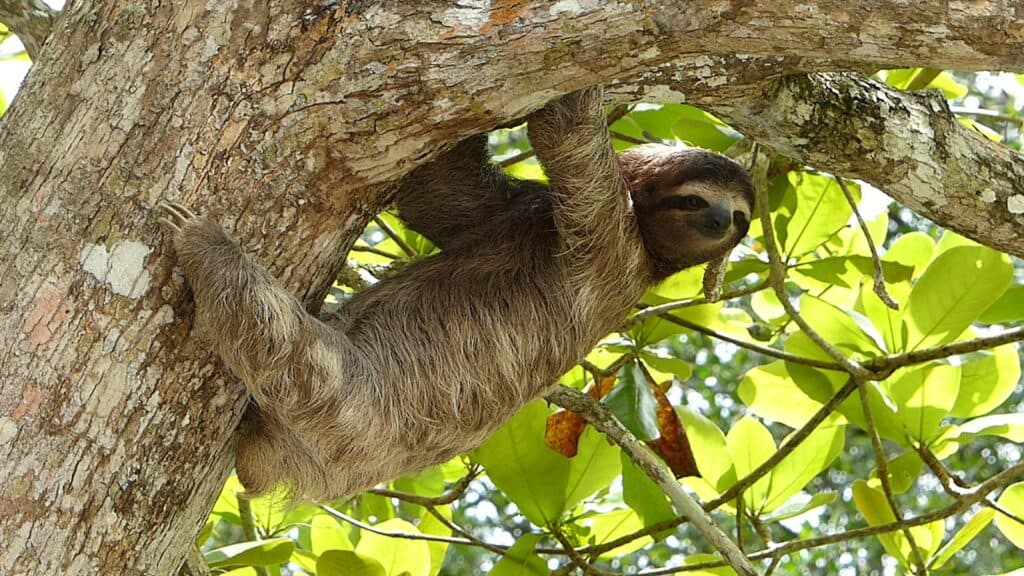
- Sloths are national symbols. Both of the country’s species, the brown-throated three-toed and Hoffmann’s two-toed sloth, got the title in 2021. Get the details in our sloth facts.
- The national bird is plain brown. It’s the yigüirro, or clay-colored thrush, chosen in 1977 for a song Costa Ricans link to the start of the rains. Meet the national bird.
- The national flower is an orchid. The purple guaria morada was declared the national flower in 1939 and blooms mainly in February and March. Read about the national flower.
- A tree gave a province its name. The Guanacaste tree, the national tree since 1959, is the namesake of Guanacaste province. See the Guanacaste tree.
- Sport hunting is banned. Costa Rica outlawed sport hunting in 2012, on private land as well as in parks. Here’s what the hunting ban covers.
Culture
Facts about Costa Rican culture
- “Tico” comes from grammar. Costa Ricans favor the diminutive ending -ico where most Spanish speakers say -ito, as in momentico for “just a moment.” That habit gave them their nickname. See what Tico means.
- “Pura vida” came from a movie. The phrase traces to a 1956 Mexican comedy, not ancient folklore, and grew into the unofficial national motto. Here’s what pura vida means.
- Painted ox carts are UNESCO heritage. UNESCO recognized Costa Rica’s oxherding and ox cart traditions in 2005. The crafts town of Sarchí still builds and paints them; see our ox cart article.
- Part of the country is a Blue Zone. The Nicoya Peninsula is one of a handful of places on Earth studied for unusually long lives. Visit the Nicoya Blue Zone.
- Nobody kills the bull. In toros a la tica, Costa Rican-style bullfighting, the law forbids harming the bull; amateurs in the ring are the ones at risk. See how bullfighting in Costa Rica works.
- Christmas means “El Gordo.” The national Christmas lottery draws on a Sunday in mid-December, and street vendors sell fractions of tickets. Here’s how El Gordo works.
Everyday life
Facts that matter on your trip
- The clocks never change. Costa Rica stays on UTC-6 all year and hasn’t used daylight saving time since 1992. The sun sets around 5:15 to 6 p.m. year-round. More on Costa Rica time.
- The shower may have wires. Many budget rooms heat water in the showerhead with an electric unit, nicknamed the “suicide shower.” Properly installed, it’s safe; here’s what to check.
- Single-use plastic stays out of the parks. Disposable bottles, bags and straws aren’t allowed into national parks and protected areas, so bring a refillable bottle. See the plastic rules.
Still getting your bearings? Start with where Costa Rica is on the map, and see our guide to Costa Rican food for the dishes you’ll eat on day one.
Common questions
Costa Rica fun facts: quick answers
Does Costa Rica really have no army?
Yes. Costa Rica abolished its army on Dec. 1, 1948, and the 1949 Constitution bans a permanent military. Civilian police forces, including a coast guard and border police, handle security.
What is Costa Rica’s national animal?
There isn’t just one. The white-tailed deer, declared a national symbol in 1995, is often called the national animal. The two sloth species became national symbols in 2021, and the national bird is the yigüirro, or clay-colored thrush.
Why are Costa Ricans called Ticos?
Because Costa Ricans often use the diminutive ending -ico where other Spanish speakers use -ito. Tico means Costa Rican and is used with pride.
Where does “pura vida” come from?
It comes from a 1956 Mexican comedy. Costa Ricans adopted the phrase over the following decades, and it now works as hello, goodbye, thanks and “all good.”
Are there capybaras in Costa Rica?
No. Capybaras live in South America, and none live wild in Costa Rica. The only ones recorded in the country were trafficked animals seized by police.
The short version
No army, a renewable power grid, sloths as national symbols and a motto borrowed from a movie: Costa Rica’s real facts are stranger than the recycled ones.Each fact above links to a full article, so pick the ones that catch your eye and keep reading.
Browse by topic
Not sure where to start? Pick the part of the trip you are working on.