
If you want to see off-the-beaten-path Costa Rica, skip the third zipline and try one of these instead: crawl through the Venado Caves near Arenal, spot crocodiles from a boat on the Tárcoles River, paddle a glowing bay on the Nicoya Peninsula, or kitesurf the windy north at Bahía Salinas. For more effort, swim through a canyon to La Leona waterfall, raft the Pacuare, sleep at a ranger station in Corcovado or walk coast to coast on El Camino de Costa Rica. Most need a guide or a booking, several depend on the season, and a few aren’t for the claustrophobic or out of shape. Each one below comes with where to go, when and who it suits.
This list is for travelers who’ve done the classic volcano-beach-zipline circuit, or who want one or two days on their first trip that feel different. Ziplining is still great; see our ziplining guide if that’s what you’re after.
| Adventure | Best time | Effort |
|---|---|---|
| Venado Caves Near La Fortuna |
Dry season | Moderate; tight squeezes |
| Crocodile boat tour Tárcoles River, Central Pacific |
Year-round | Easy |
| Bioluminescent kayaking Paquera, Golfo Dulce |
Dark nights, away from the full moon | Easy |
| Bungee jumping Monteverde |
Year-round | Easy physically, hard mentally |
| Kitesurfing and windsurfing Bahía Salinas, Lake Arenal |
About November to April | Moderate to hard |
| Canyon and cave waterfalls La Leona, El Santuario |
Dry season | Moderate |
| Overnight rafting Pacuare River |
Year-round; flows vary | Moderate |
| Corcovado overnight Osa Peninsula |
Dry season | Hard |
| Coast-to-coast trek El Camino de Costa Rica |
December to April | Hard |
| Turtle nesting at night Tortuguero, Ostional |
Depends on species and beach | Easy |
Thrills
Off-the-Beaten-Path Adventures in Costa Rica
1. Crawl Through the Venado Caves

About 45 minutes from La Fortuna, the Venado Caves run for roughly 2.7 km through limestone that formed millions of years ago. Guided tours last about two hours and involve wading through an underground stream, crawling and squeezing through narrow gaps, with bats and stalactites along the way. Helmets and lamps are provided.
- Good fit: active travelers and kids old enough to meet the tour’s minimum age, usually 7 or 8.
- Skip it if: you’re claustrophobic, pregnant, or have back or heart problems.
- Know before you go: heavy rain can raise the river inside and cancel tours. Expect to get wet and muddy.
See our Venado Caves guide.
2. See Crocodiles on the Tárcoles River

The Tárcoles River, next to Carara National Park on the Central Pacific coast, has one of the largest populations of American crocodiles in the country, and some reach about 5 meters (16 feet). Boat tours from the fishing village of Tárcoles take about 90 minutes and pass mangroves full of birds, including herons, wood storks and often scarlet macaws.
- Pick an operator that doesn’t feed the crocodiles. Some do it for photos, but feeding wildlife is illegal in Costa Rica and changes the animals’ behavior.
- Free alternative: the Crocodile Bridge on Route 34 near Tárcoles lets you look down on dozens of crocodiles from the walkway. Don’t leave valuables in your car.
- Combine it with a morning in Carara or a stop on the way to Jacó or Manuel Antonio.
Crocodiles also live in many river mouths along the Pacific; see our guide to crocodile safety at the beach.
3. Paddle a Bioluminescent Bay
On some nights, plankton in Costa Rica’s sheltered bays glows blue-green when disturbed, so every paddle stroke and hand trailed in the water leaves a streak of light. The best-known tours launch near Paquera, on the Gulf of Nicoya side of the Nicoya Peninsula, about 10 minutes from the Paquera ferry landing. The Golfo Dulce on the Osa Peninsula is the other main spot.
- Go on a dark night. Bright moonlight drowns out the glow, so avoid the days around the full moon.
- Put the phone away. Most phones can’t capture the faint glow, and your eyes need a few minutes to adjust to the dark.
- Expect about 90 minutes on the water in stable sit-on-top kayaks; no experience needed.
4. Bungee Jump in Monteverde
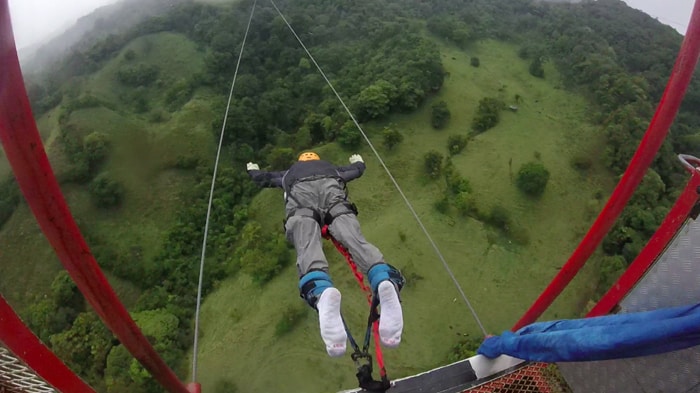
If ziplining feels tame, Monteverde Extremo runs a 143-meter bungee jump from a cable car over a forested valley, along with a Tarzan swing. Weight and age limits apply, so check before booking. Bridge jumps near San José have had permit problems at times, so confirm any operator is running before you plan around it.
See our bungee jumping guide and our Monteverde guide.
5. Kitesurf or Windsurf in the Windy North
From about November to April, strong trade winds blow across northern Costa Rica. Bahía Salinas, near the Nicaraguan border, is the country’s kitesurfing center, with schools on Playa Copal and Playa Papaturro, flat water inside the bay and water warm enough to skip a wetsuit. Lake Arenal, next to Arenal Volcano, gets strong winds over the same months and has long drawn windsurfers.
- Beginners: book a multi-day lesson package; kitesurfing takes several sessions to learn safely.
- Off-season: winds drop in the rainy season, and some schools close.
Water and trails
Remote Rivers, Waterfalls and Treks
6. Swim to a Canyon or Cave Waterfall

Near Rincón de la Vieja, about 20 minutes from Liberia, La Leona waterfall sits at the end of a narrow canyon you reach by hiking, then swimming with a life jacket. Guided visits take about 2.5 to 3 hours and need a reservation. Farther north near Upala, El Santuario drops into a rock chamber reached by wading up a river.
7. Raft the Pacuare River Overnight

The Pacuare runs through a deep, forested gorge on the Caribbean slope, with class III and IV rapids. Day trips are common, but the two-day version, with a night at a lodge in the gorge, gives you a second day on the river and the canyon in early morning light. See our white water rafting guide.
8. Sleep in Corcovado National Park
Corcovado, on the Osa Peninsula, is one of the wildest places in Central America. Most visitors do a day trip by boat from Drake Bay, but an overnight at Sirena Ranger Station gives you the dawn and dusk hours when tapirs, peccaries and monkeys are most active. A certified guide is required, daily visitor numbers are capped, and Sirena has closed to overnight visitors at times, so book early and confirm status. See our Corcovado guide.
9. Walk Coast to Coast on El Camino de Costa Rica

El Camino de Costa Rica is a 280-km trail from the Caribbean to the Pacific at Quepos, split into 16 stages that take about 12 to 16 days. It passes through Indigenous Cabécar territory, cloud forest and coffee towns, with nights in family homes and small lodges. Every overnight must be booked ahead. Most people walk a section rather than the full trail. See our El Camino guide.
10. Watch Sea Turtles Nest at Night
Night tours on nesting beaches let you watch a turtle dig, lay eggs and return to the sea. Tortuguero, on the Caribbean coast, is known for green turtles, which nest from about July to October. At Ostional, on the Nicoya Peninsula, olive ridleys come ashore by the thousands in mass nestings called arribadas, mostly in the rainy season. Visits require a certified guide, and white lights and flash photography aren’t allowed. See our guide to sea turtle nesting sites and how to get to Tortuguero.
Plan
How to Plan Off-the-Beaten-Path Trips in Costa Rica
- Book a guide for anything underground, on rivers or in remote parks. Several of these legally require one, and the rest are safer with one.
- Check the season. Rain closes caves and canyons, wind makes or breaks kitesurfing, and moon phase decides the bioluminescence.
- Build in buffer days. Weather cancellations are common in the rainy season.
- Check your travel insurance covers adventure activities such as bungee, rafting and kitesurfing.
- Bring cash for small operators and rural areas, and water shoes for wet activities.
For timing, see the best time to visit Costa Rica by region. For more ideas on foot, see our Costa Rica hiking guide.
Avoid
Common Mistakes to Avoid
- Booking a bioluminescence tour on a full moon.
- Choosing a crocodile tour that feeds the animals.
- Planning canyon or cave trips for the wettest months without a backup day.
- Assuming a remote park is open. Corcovado’s stations and some waterfalls close for safety or maintenance.
- Underestimating effort. Corcovado and the Camino involve long, hot, muddy days.
FAQ
Off-the-Beaten-Path Costa Rica: FAQ
What are some unique things to do in Costa Rica?
Caving at Venado near La Fortuna, a crocodile boat tour on the Tárcoles River, bioluminescent kayaking near Paquera, kitesurfing in Bahía Salinas, swimming to La Leona waterfall, overnight rafting on the Pacuare, and sleeping in Corcovado National Park.
Where can you see bioluminescence in Costa Rica?
The best-known tours are near Paquera on the Gulf of Nicoya side of the Nicoya Peninsula, and in the Golfo Dulce on the Osa Peninsula. Go on a dark night away from the full moon.
Are the Tárcoles crocodile tours safe?
Yes, with a reputable operator. You stay in the boat. Choose a company that doesn’t feed the crocodiles, which is illegal.
When is the best time for kitesurfing in Costa Rica?
About November to April, when strong trade winds blow across Bahía Salinas and Lake Arenal.
Do I need a guide for these adventures?
For most of them, yes. Guides are required in Corcovado, in the Venado Caves and on turtle-nesting beaches, and strongly recommended for canyons and rivers.
Can families do off-the-beaten-path activities in Costa Rica?
Several work well for families, including the crocodile boat tour, bioluminescent kayaking and turtle watching. Caves and bungee have minimum ages.
The short version
Pick one or two of these to break up the usual circuit.
Match each to the season, moon or wind it depends on.
Book a good guide, and leave a buffer day for weather.