
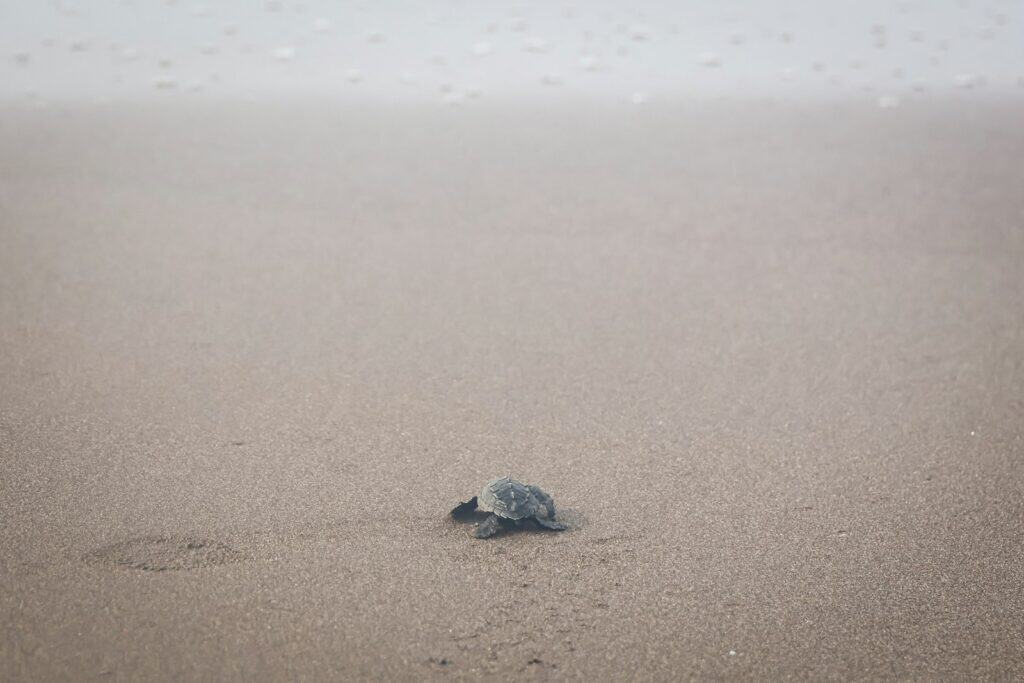
The biggest surprise for most would-be volunteers isn’t the work. It’s the bill. Many Costa Rica volunteer packages cost more per week than a good hotel, and much of that money goes to a placement agency rather than to the turtles, animals or community you came to help.
Volunteering in Costa Rica works best when you book directly with a Costa Rican nonprofit, stay long enough to be useful, and pick work that doesn’t revolve around touching animals. The main options are sea turtle conservation, wildlife rehabilitation, and community or farm projects. Short stays mostly pay for your room and board; long research posts can cost little beyond your flight.
- Room & boardWhat a fair direct program fee mostly covers
- 3 monthsTypical length of research assistant posts, which often cost little
- Hands offGood wildlife programs keep human contact with animals to a minimum
The money
What volunteering in Costa Rica costs
The same night on the same turtle beach can cost very different amounts depending on how you book it. Here’s how the main routes compare.
| How you book | What you pay | What to know |
|---|---|---|
| International placement agency | Often several hundred dollars a week or more | Bundles airport pickup, orientation and support. Ask how much reaches the project. |
| Directly with a Costa Rican nonprofit | Often about $15 to $30 a day for a bed, sometimes with meals, plus a small program fee | Cheapest per week. You arrange your own transport and do your own homework. |
| Long-term research assistant | Little or nothing beyond travel; sometimes a refundable deposit | Usually around 2.5 to 4 months, with long nights and real responsibility. |
| Work exchange at hostels or farms | A bed, and sometimes meals, for set hours of work | Not conservation, and closer to a job than volunteering. See the visa section below. |
Agencies aren’t automatically a bad choice. First-time travelers, students and anyone who wants a safety net may value the support. Just know what you’re paying for, and compare the agency price with what the host project charges people who apply directly.
Your options
Types of volunteer work in Costa Rica
Sea turtle conservation
The most popular choice, and the most physically demanding. Volunteers walk nesting beaches at night, record nesting females, move eggs to protected hatcheries and help with morning surveys. Expect sand, rain, mosquitoes and very little sleep. Caribbean beaches such as Pacuare and Tortuguero host leatherbacks and green turtles; Pacific beaches such as Ostional host olive ridleys. Seasons differ by beach and species, so check our guide to sea turtle nesting sites before you pick dates.
Wildlife rescue and rehabilitation
Rescue centers take in injured, orphaned and confiscated animals: sloths, monkeys, birds and anteaters. The reality of the work is cleaning enclosures, chopping food, building enrichment and doing laundry. A center that’s serious about releasing animals keeps contact low, because animals that bond with people do poorly in the wild. If the brochure promises cuddles, look elsewhere.
Community, teaching and farm projects
Options include teaching English, helping on organic farms, and building or maintenance work in rural communities. Spanish matters more here than on a turtle beach. If yours is basic, pair your stay with classes; see our article on learning Spanish in Costa Rica.
Due diligence
How to vet a volunteer program
Email the organization before you pay anything, and ask:
- Who runs it? A registered Costa Rican nonprofit, a university, a government partner or a private business?
- Where does my fee go? A good program breaks it down: housing, food, staff, project costs.
- What does a typical day look like? Hours, tasks and how many other volunteers are there.
- What happens to the animals? Release rates and rules on contact tell you more than any photo.
- What’s the minimum stay, and is there training? One week of untrained help is often more burden than benefit.
- What immigration status do your volunteers use? Get the answer in writing.
Our ecotourism guide covers the same principles for tours and lodges.
Paperwork
Visas, insurance and the tourist stay
Most short-term volunteers enter Costa Rica as tourists. The allowed stay is set by the immigration officer at entry, up to 180 days for travelers from the United States, Canada, the United Kingdom and the European Union; our 180-day rule explainer covers how it works. Tourist entry is meant for tourism, though. Long placements, and arrangements that look like a job, such as working a hostel front desk in exchange for a bed, can cross into work that needs immigration permission. Ask your host what status its volunteers use before you book, and don’t plan to stay past the date stamped in your passport.
Many programs require travel medical insurance, and some wildlife centers ask for a recent TB test. See our article on travel medical insurance and check vaccinations for Costa Rica before you go. Planning to stay longer? Our article on moving to Costa Rica covers residency.
Common questions
Volunteering in Costa Rica, answered
Can you volunteer in Costa Rica for free?
Rarely for short stays, since most programs charge at least room and board. Long research assistant posts and work exchanges can cover your bed and sometimes meals, but you still pay for travel and insurance.
How long do I need to volunteer?
Many programs ask for at least one to two weeks. Research assistant posts on turtle beaches usually ask for around 2.5 to 4 months. Longer stays are more useful to the project and usually cheaper per week.
Do I need a special visa to volunteer in Costa Rica?
Most short-term volunteers enter as tourists. Long placements, or arrangements that look like a job, can require immigration permission, so ask the organization what status its volunteers use and get it in writing.
Can I help sea turtles without signing up as a volunteer?
Yes. Nesting beaches such as Tortuguero offer guided night tours to watch turtles nest. You get the experience without a multi-week commitment, and the guide fees support local conservation.
Do I need to speak Spanish to volunteer?
Not for most conservation programs, where staff often speak English. For teaching, farm and community projects, basic Spanish makes you far more useful.
The short version
Book directly with a Costa Rican nonprofit when you can, stay at least a couple of weeks, and choose work that keeps your hands off the animals.Ask where the money goes and what your days will look like before you pay. A good program answers both questions without hesitating.
Browse by topic
Not sure where to start? Pick the part of the trip you are working on.